Healthy Soil, Better Plants : How to Build Garden Soil That Holds Water, Feeds Roots, and Resists Disease
By Ashley Chalmers | Published on July 28, 2026
Key Takeaways
- Healthy soil is a living system, not just dirt plus fertilizer. The goal is to improve structure, biology, and nutrient cycling so plants can feed themselves more reliably.
- The fastest path to better soil is consistent organic matter + reduced compaction + smarter watering, tailored to your soil type (sand, clay, loam).
- You’ll get the best results by using simple tests (texture, infiltration, pH) to guide amendments guessing often leads to over-fertilizing and poor root health.
In This Article
What “Healthy Soil” Really Means (Beyond Fertility)
Many gardens fail for a sneaky reason: the soil contains nutrients, but plants can’t access them. That happens when soil is compacted, waterlogged, too dry, or chemically out of balance conditions that limit root growth and the microbial life that makes nutrients available.
Think of healthy soil as having three jobs :
- Store and release water at the right pace
- Hold nutrients without locking them away
- Support life (microbes, fungi, earthworms) that feeds plants naturally
When those are working, plants grow with fewer pest issues, tolerate heat better, and bounce back faster after stress.
The 4 Core Traits of Great Soil
1) Good structure (crumb, not clods)
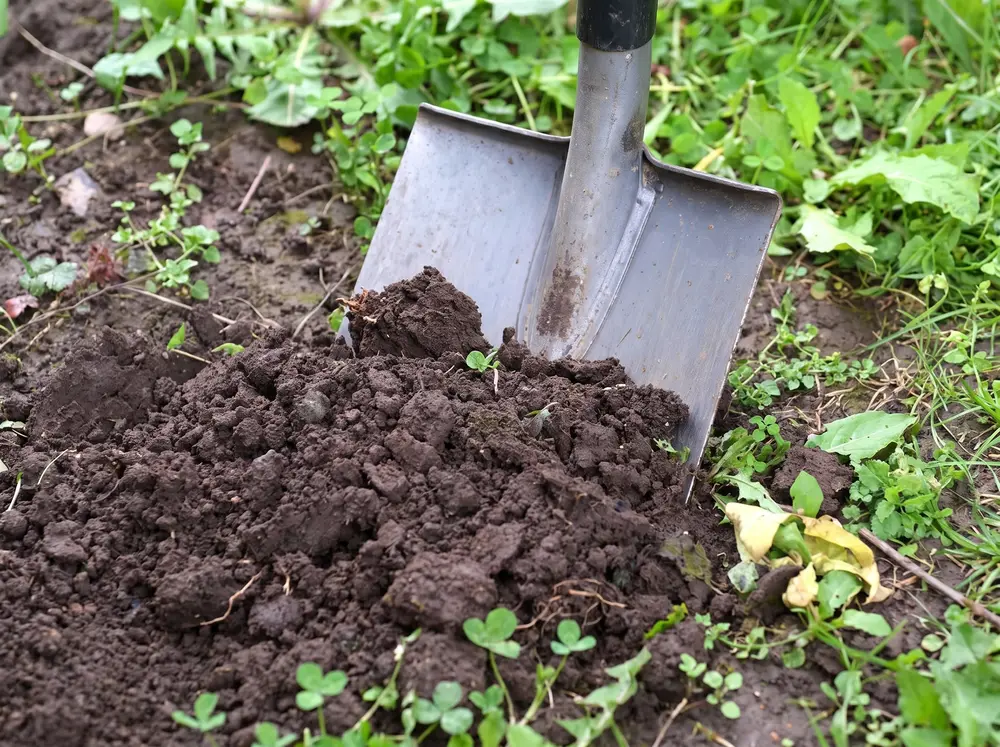
Healthy soil forms stable “crumbs” that resist crusting and compaction. You can dig it easily, roots can push through it, and water soaks in instead of pooling or running off.
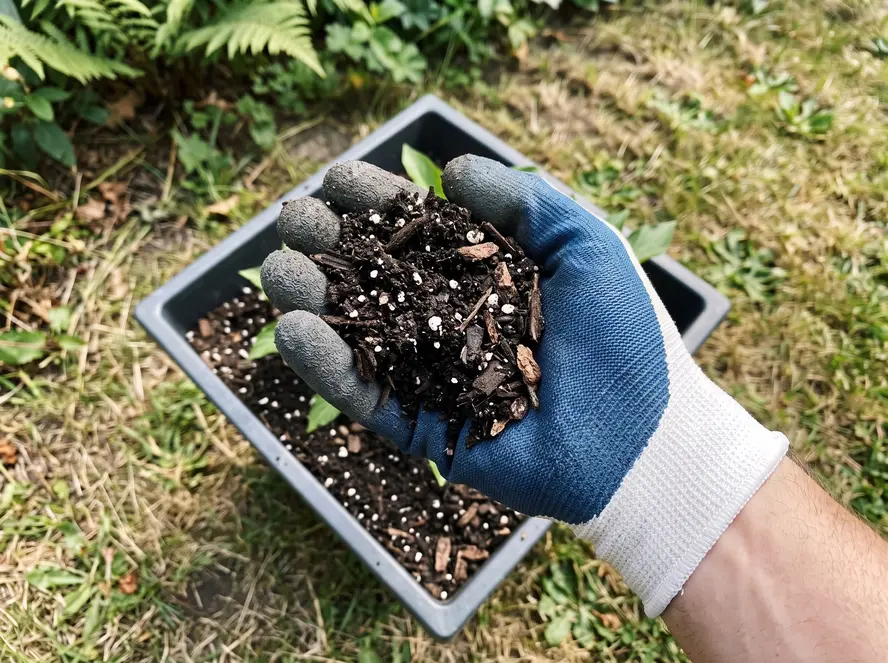
What it looks like: dark, fluffy aggregates; you see pores and small channels.
2) Active biology (the underground workforce)
Bacteria, fungi, protozoa, nematodes, and earthworms break down organic matter and convert nutrients into plant-available forms. This biology is also part of disease suppression diverse soil life tends to outcompete many pathogens.
Clues it’s working: earthy smell, worm activity, leaf litter disappearing over time.
3) Balanced moisture (holds water, but drains)
Plants dislike extremes: soggy roots rot; bone-dry soil shuts down nutrient uptake. Healthy soil acts like a sponge absorbs water, then releases it gradually.
4) A suitable pH for your plants
pH isn’t about “good” or “bad” it’s about availability. Many nutrients become harder to absorb when pH is too high or too low. Most garden plants prefer slightly acidic to near-neutral conditions, but some (blueberries, azaleas) are exceptions.
Know What You’re Starting With : Quick Soil Checks You Can Do Today
You don’t need a lab to learn a lot—these simple checks prevent wasted effort.
1) Texture test (the “ribbon” test)
Moisten a handful of soil and rub it between fingers:
- Feels gritty, won’t hold shape: sandy
- Smooth and sticky, forms a ribbon when pressed: clay
- Mix of gritty + smooth, forms a weak ribbon: loam / balanced
2) Drainage/infiltration test
Dig a small hole about 6 inches deep and wide. Fill with water and let it drain once (pre-wets soil). Fill again and watch:
- Drains very fast: likely sandy, low water-holding
- Sits for a long time: likely clay/compacted layer
- Drains steadily: ideal
3) Compaction check
Push a wire flag, screwdriver, or soil probe into moist soil:
- Easy penetration: good porosity
- Hard resistance at a certain depth: compaction layer (often from foot traffic or past tilling)
4) The best test you can buy : a local soil lab report
A county extension or reputable soil lab test is worth it if you’re:
- Starting a new garden bed
- Struggling with persistent yellowing/poor growth
- Growing vegetables and want targeted fertility guidance
It will usually include pH and key nutrients and can save you from adding the wrong amendments.
The Main Soil Types (and What Each One Needs)
Clay soil (fertile but tight)
Strengths: holds nutrients well, can be productive
Challenges: compacts easily; drains slowly; can suffocate roots
Best approach: increase structure and pore space with organic matter on top (and time). Avoid working it when wet.
Sandy soil (easy to dig but “leaky”)
Strengths: warms quickly; drains fast; easy root penetration
Challenges: dries fast; nutrients wash through
Best approach: add organic matter frequently + mulch to slow evaporation. Smaller, consistent improvements beat one big amendment.
Loam (the goal)
Strengths: balanced drainage + moisture holding
Challenges: can still compact; can be depleted by heavy feeding
Best approach: maintain it compost, mulch, minimal disturbance, cover crops if you grow intensively.
How to Improve Any Soil : The High-Impact Fixes (In the Right Order)
1) Add organic matter consistently, not once
If you only do one thing: use compost.
How to use it well
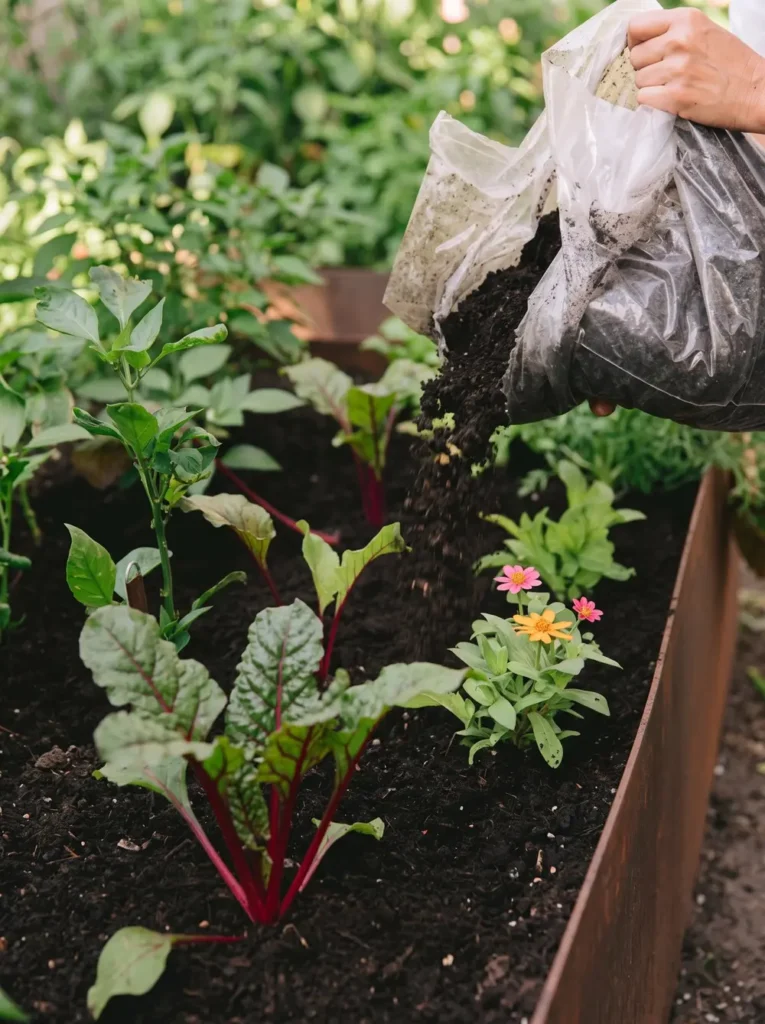
- Top-dress beds with a layer and let rain, worms, and roots pull it down over time.
- Use as a side-dress around heavy feeders during the growing season.
- In fall, apply again to protect soil and feed biology over winter.
Other good organic inputs
- Shredded leaves (excellent and often free)
- Aged manure (must be well-composted for gardens; follow safe handling for edibles)
- Grass clippings (thin layers only; avoid herbicide-treated lawns)
What to avoid
- Adding a lot of fresh, high-carbon material (like wood chips) into the soil where plants are growing use those as surface mulch instead.
2) Stop compaction before you “fix” soil
Many soil problems are really traffic problems.
Easy rules that change everything
- Create permanent paths; don’t step in beds.
- In raised beds, never kneel inside the bed use a board if you must distribute weight.
- Work soil only when it’s not wet enough to smear into ribbons.
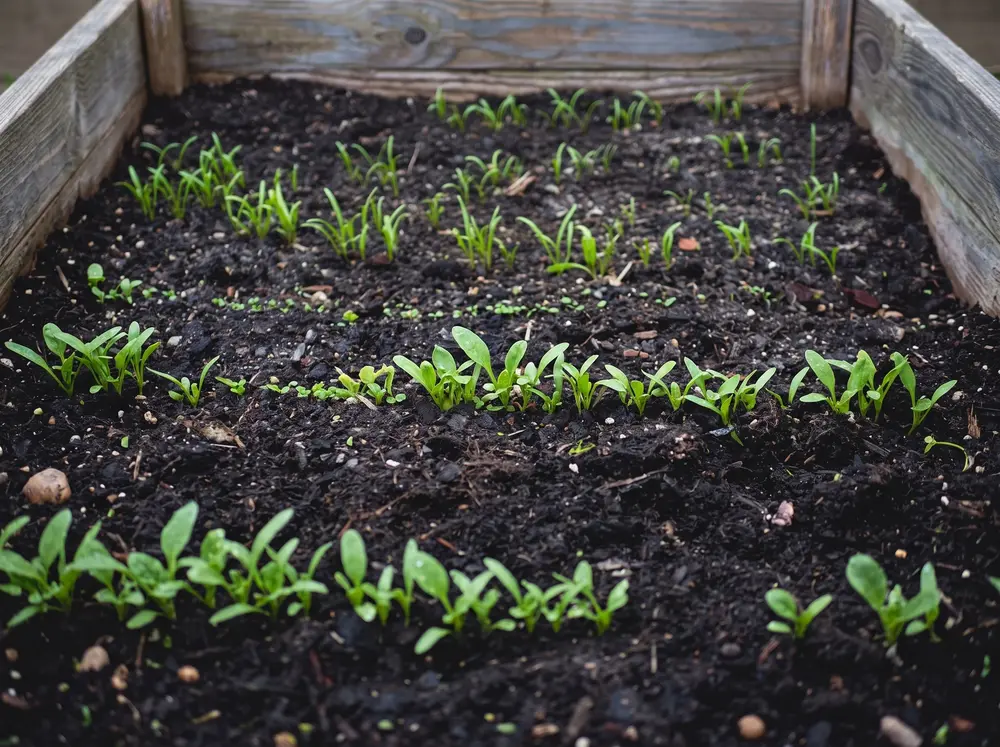
3) Improve drainage without “fighting” your soil
If water pools or roots rot :
- Add compost (structure)
- Use mulch (reduces crusting, improves infiltration)
- Consider raised beds where clay is extreme
- Plant water-tolerant species in naturally wet spots rather than forcing a mismatch
4) Feed plants but don’t confuse fertilizer with soil-building
Fertilizer can help growth short-term, but it doesn’t fix :
- Poor structure
- Weak biology
- Compaction
If you fertilize without improving structure, you often get fast top growth with fragile roots and more pest pressure.
Best practice : use fertilizers as a supplement, guided by plant needs and (ideally) a soil test.
5) Keep the soil covered (mulch and living roots)
Bare soil breaks down quickly under sun and heavy rain.
Two strong options
- Mulch : leaf mold, straw (weed-free), shredded leaves, bark (ornamentals)
- Cover crops : clover, oats, rye, vetch (great for veggie gardeners in off-season)
Cover crops do more than add nutrients they improve structure with living roots and reduce erosion.
Soil pH : When It Matters and How to Adjust It Safely
pH matters most when :
- You see chronic nutrient-deficiency symptoms despite fertilizing
- You grow pH-sensitive plants (blueberries need more acidic conditions; many Mediterranean herbs tolerate higher pH)
- Your water is very hard/alkaline or your soil is naturally calcareous
How to handle pH the smart way
- Test first (don’t guess).
- Adjust gradually big swings can stress plants and soil life.
- Re-test after changes.
General guidance
- To raise pH, gardeners often use lime (rates vary widely by soil and product follow test recommendations).
- To lower pH, sulfur products are common, but they act over time and need correct dosing.
- Compost tends to gently buffer extremes and improve nutrient availability even when pH isn’t perfect.
A Simple 30-Day + Seasonal Plan for Better Soil
The next 30 days (fast improvements)
- Add compost as a top-dress.
- Mulch to protect soil and reduce watering stress.
- Establish no-step zones and paths.
- Do a basic infiltration test and adjust watering accordingly.
Spring (prep and plant)
- Light compost top-dress
- Minimal digging just enough to plant
- Start a mulch routine early to prevent summer soil baking
Summer (maintain)
- Side-dress heavy feeders with compost
- Keep soil covered; avoid letting beds go bare
- Water deeply and less often to encourage roots (unless seedlings/transplants)
Fall (the “soil-building season”)
- Add compost again
- Apply leaf mulch
- Plant cover crops if you grow vegetables
- Leave roots in the soil when possible (cut plants at the base instead of pulling) to preserve channels and soil structure
Common Mistakes That Keep Soil From Improving
- Tilling every season and then wondering why soil stays fluffy for two weeks and then turns hard again
- Adding sand to clay in small amounts (this can create a concrete-like texture). Organic matter is usually safer and more effective.
- Over-fertilizing to “fix” weak plants when the real issue is compaction or poor drainage
- Leaving soil bare, which accelerates crusting, erosion, and moisture loss
- Working clay soil wet, which destroys structure
FAQs
What are the basic components of soil ?
A healthy soil system includes mineral particles (sand/silt/clay), organic matter, water, air, and living organisms all interacting together.
Can I make bad soil good without replacing it ?
Yes. Most long-term soil improvement comes from top-down organic matter additions, reduced compaction, and keeping soil covered. Replacing soil is expensive and often unnecessary.
How do I know my soil is improving ?
Look for :
- Easier digging and better “crumb” structure
- Faster infiltration with less runoff
- More earthworms and an earthy smell
- Plants that need less rescuing during heat and drought
Is homemade compost enough for vegetables ?
Often, yes especially when paired with mulch and good watering practices. For maximum yields, some gardens also benefit from targeted fertilizers based on a soil test, but compost is the foundation.