Pot vs Planter vs Cachepot : How to Choose the Right Container (So Your Plants Don’t Struggle)
By Ashley Chalmers | Published on July 28, 2026
Key Takeaways
- Pots are typically used for single plants; planters usually hold multiple plants or larger root systems but the bigger issue is how the container drains and dries.
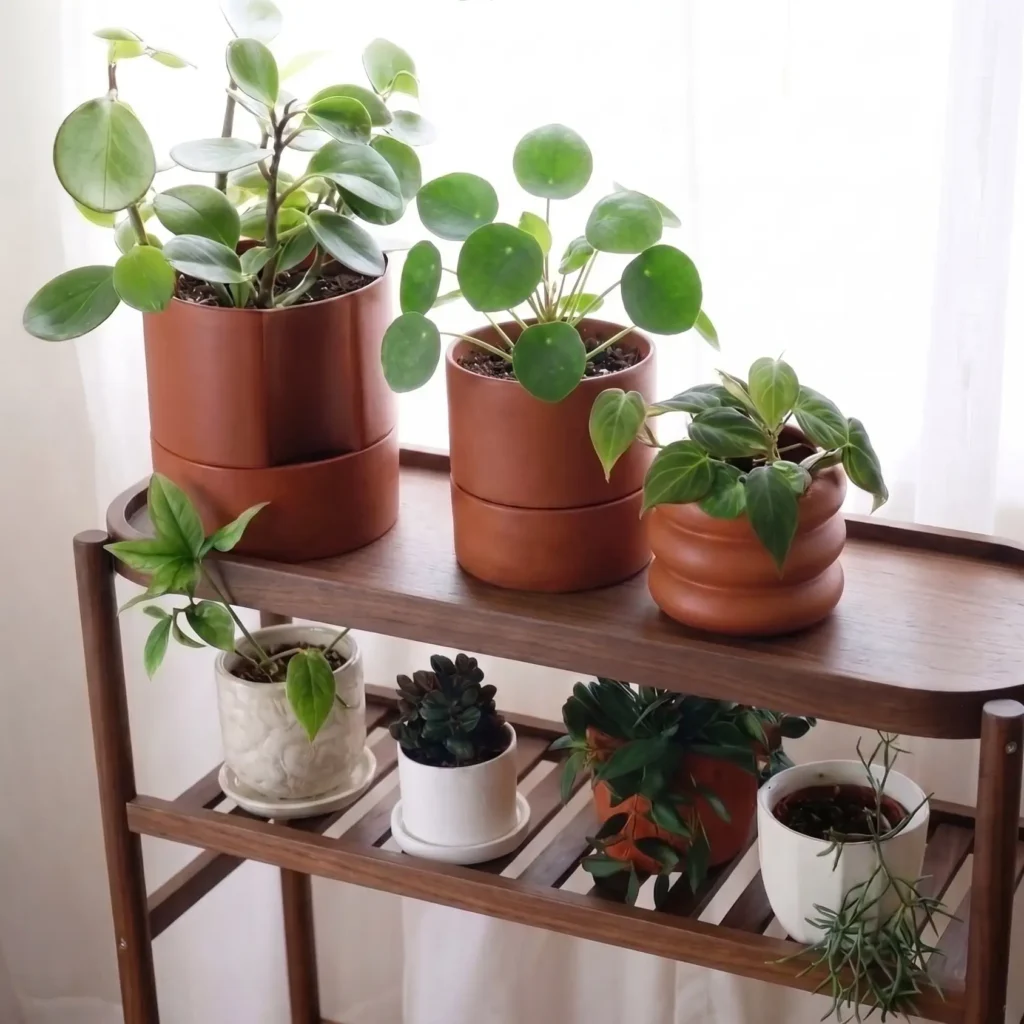
- The healthiest setup for most indoor plants is a nursery pot (with drainage) inside a decorative cachepot, as long as you never leave standing water behind.
- Most container failures come from three mistakes: no drainage, oversized containers, and the wrong material/soil combo for your watering habits.
In This Article
The Real Difference : It’s Not the Name It’s the Job
Gardeners use “pot” “planter” and “container” loosely and that’s fine. What matters is choosing a vessel that matches your plant’s needs and your environment :
- Does it drain freely ?
- Does it dry at the right pace for that plant ?
- Does it give roots enough room without staying wet for too long ?
- Can it survive where you’ll place it (sun, heat, freezing weather) ?
If you get those right, the label on the price tag matters a lot less.
Container Types Explained (Simple, Real-World Definitions)
Gardeners use “pot” “planter” and “container” loosely and that’s fine. What matters is choosing a vessel that matches your plant’s needs and your environment :
- Does it drain freely ?
- Does it dry at the right pace for that plant ?
- Does it give roots enough room without staying wet for too long ?
- Can it survive where you’ll place it (sun, heat, freezing weather) ?
If you get those right, the label on the price tag matters a lot less.
Container Types Explained (Simple, Real-World Definitions)
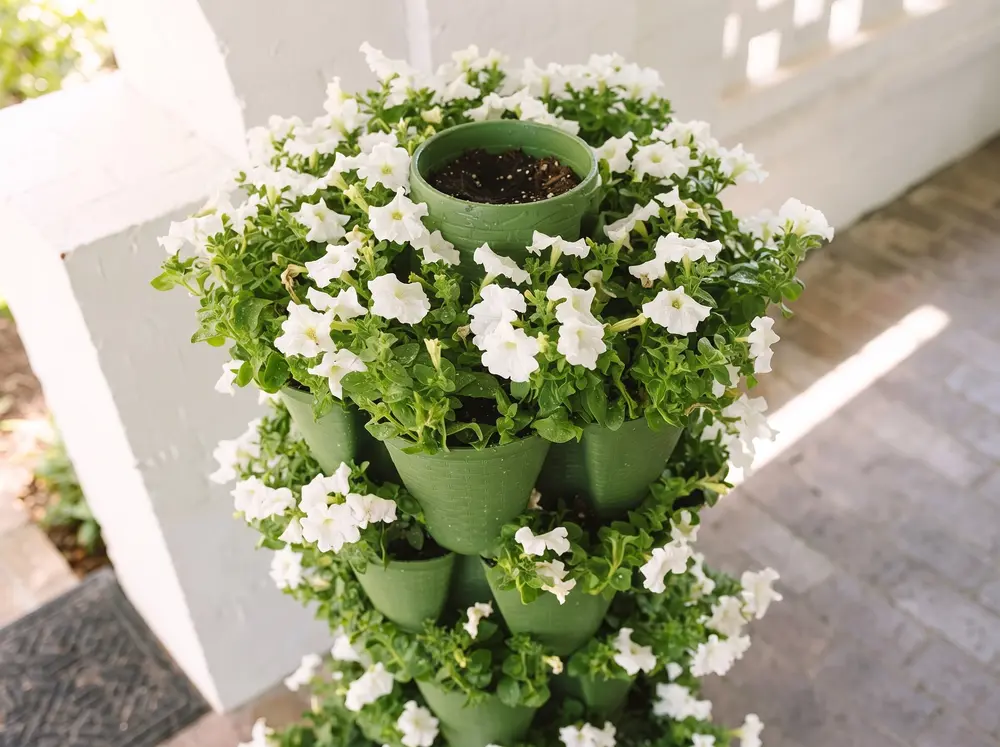
1) Pot
Usually :
- Smaller to medium size
- Often holds one plant
- Common indoors (houseplants) and outdoors (single herbs, small shrubs)
2) Planter
Usually :
- Larger, wider, or longer
- Designed for multiple plants (mixed flowers, porch arrangements) or bigger plants (dwarf trees, shrubs)
- Common outdoors because they’re heavier, more stable, and weather-ready
3) Nursery pot / grow pot
- Lightweight plastic pot your plant often comes in
- Almost always has excellent drainage holes
- Not pretty, but very functional (and often ideal for plant health)
4) Cachepot (decorative outer pot)
- Decorative container that often has no drainage holes
- Used as an outer sleeve: nursery pot goes inside
- Looks great, but requires good watering discipline (empty excess water every time)
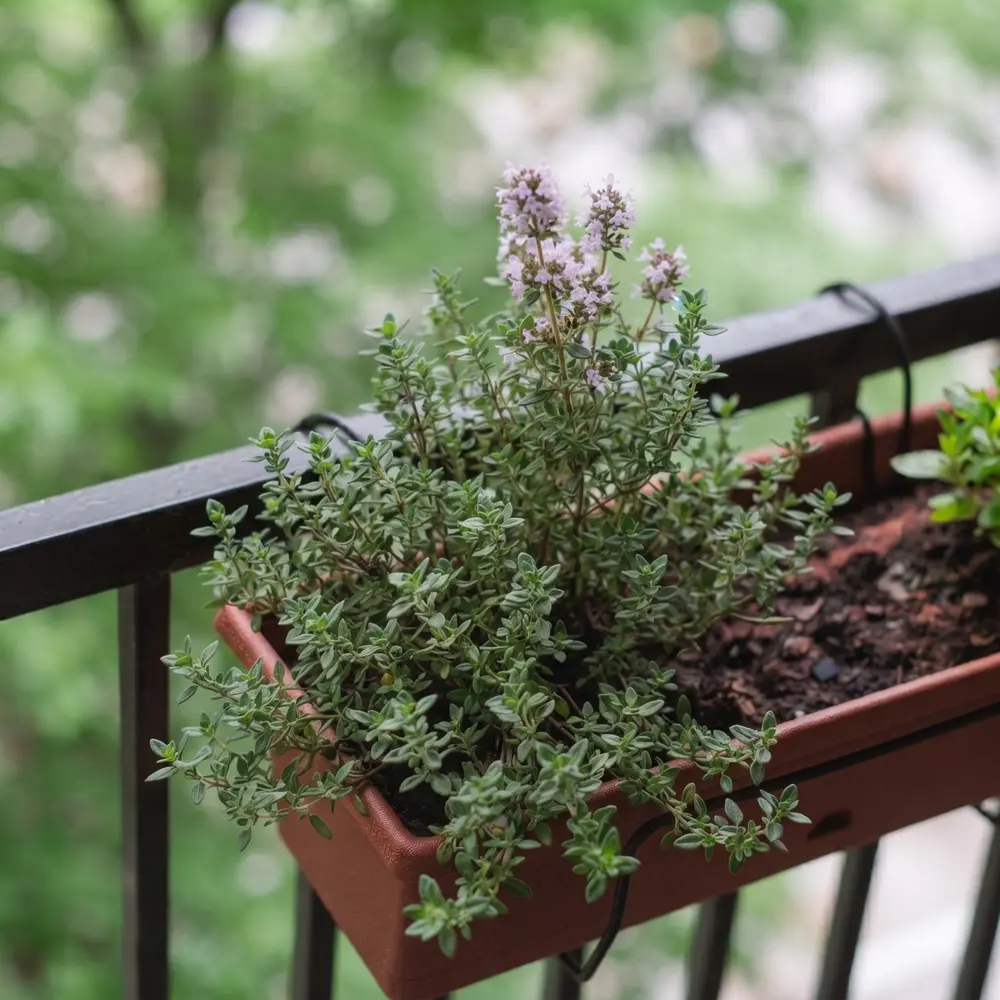
5) Window box / trough / raised planter
- Long, shallow planters for mixed plantings
- Can dry fast in sun and wind; often need more frequent watering and careful soil choice
The “Right Container” Checklist (5 Questions)
Use this checklist before buying any pot/planter :
Where will it live indoors or outdoors ?
Outdoors demands UV resistance, weather durability, and stability in wind.Does it have drainage holes (or can you add them) ?
If not, plan a nursery-pot-inside-cachepot system.How big is the plant’s current root ball and how fast does it grow ?
Oversizing is one of the most common causes of root rot.How often do you realistically water ?
If you tend to water often, choose materials and mixes that dry faster.Will you need to move it ?
Large ceramic planters can be extremely heavy once filled mobility matters.
Drainage : What You Must Do Every Time
Drainage isn’t optional. It’s the difference between “moist” roots and oxygen-starved roots.
Best practice options
- Option A (best for most plants) : Pot/planter with drainage holes + saucer
- Option B (common indoors) : Nursery pot with drainage holes inside a cachepot
- Water at the sink
- Let it drain fully
- Return it to the cachepot only after excess water is gone
Skip the “rocks at the bottom” trick
Adding a gravel layer at the bottom doesn’t improve drainage the way people think. It often creates a zone where water sits higher in the pot, keeping roots wetter. Better drainage comes from :
- drainage holes,
- a suitable potting mix,
- correct pot size.
Material Matters : What Your Container Is Made Of Changes Plant Care
Terracotta (unglazed clay)
Pros : breathable, dries faster, great for plants that hate wet feet (many succulents)
Cons : needs more frequent watering; can crack in freezing weather
Glazed ceramic
Pros : attractive, heavier (stable), holds moisture longer than terracotta
Cons : heavy; can crack with freezes; often pricier
Plastic
Pros : lightweight, inexpensive, holds moisture well, great for hanging baskets
Cons : can overhold water if soil is dense; may degrade in harsh sun over time
Fiberglass/resin
Pros : lighter than ceramic, often weather-resistant, good for large planters
Cons : quality varies; cheaper ones can fade or become brittle
Metal
Pros : modern look, durable
Cons : heats up fast in full sun can overheat roots; may rust unless treated
Wood
Pros : classic for raised planters; insulates roots better than metal
Cons : eventually decays; liners and drainage planning help extend life
Sizing Rules : How Big Should You Go ?
For houseplants (repotting rule)
Move up 1–2 inches (2–5 cm) wider than the current pot for most plants.
Why not bigger ?
A pot that’s too large holds extra wet soil the roots can’t use quickly, which keeps the root zone damp longer and raises the risk of root rot.
For outdoor planters (mixed plantings)
You can size larger, but balance matters :
- Big volume = more stable moisture (good)
- Big volume + poor drainage = waterlogged roots (bad)
If you’re planting multiple flowers together, choose a planter that gives each plant enough root room and won’t dry out in one hot afternoon.
Plant Pairing in Planters : Combine Plants That Actually Get Along
Mixed planters look amazing, but only if the plants want the same conditions.
Match these three factors
- Sun needs : full sun with full sun; shade with shade
- Water needs : drought-tolerant together; moisture lovers together
- Growth rate : aggressive growers can bully slower plants
A simple formula that works
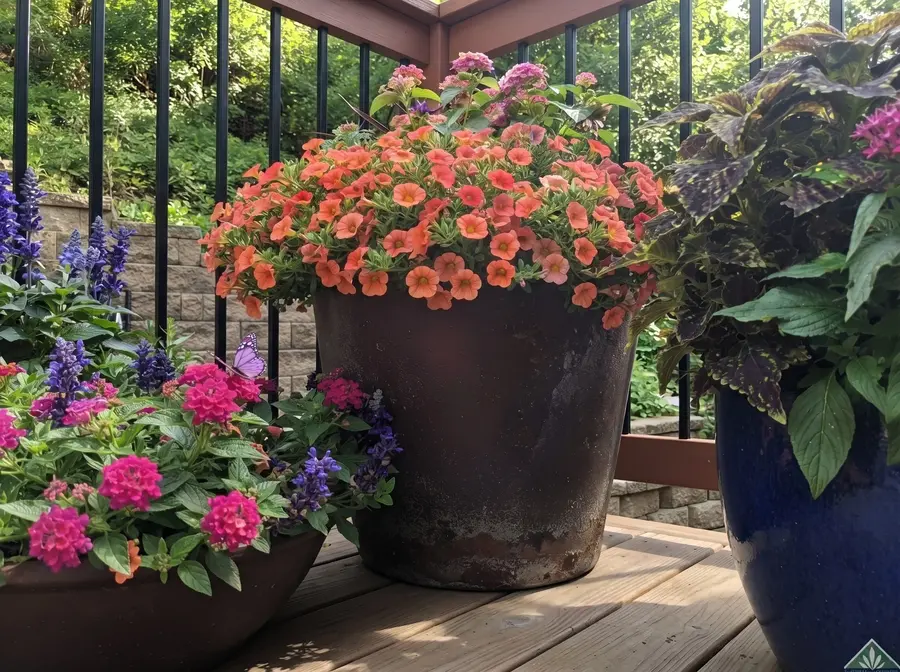
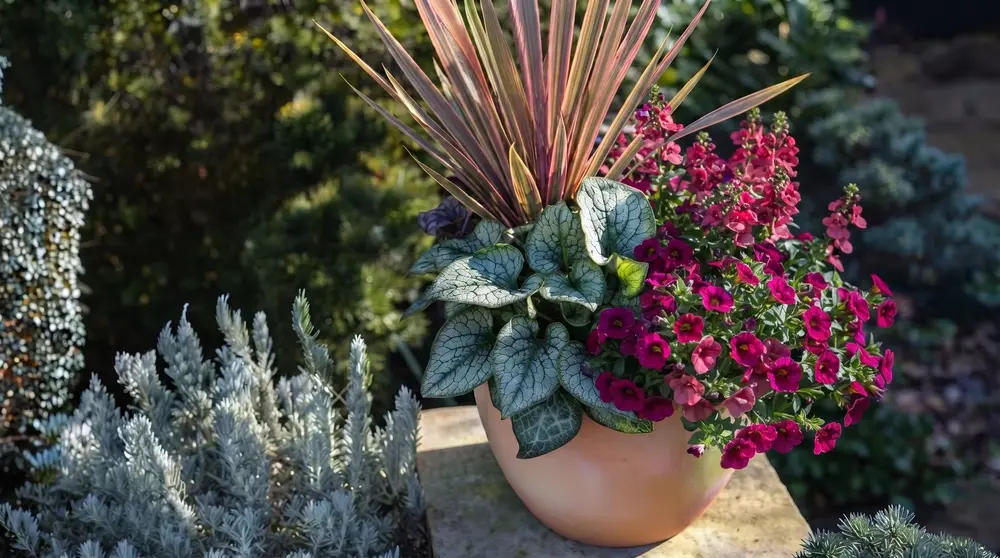
For outdoor decorative planters, many gardeners use :
- 1 “tall” plant (height/structure)
- 1–2 “filler” plants (bulk)
- 1–2 “spillers” (trail over the edge)
Just be sure they share similar light and watering requirements.
Common Container Mistakes (and Quick Fixes)
- No drainage hole : switch to a nursery pot inside, or drill drainage (if material allows).
- Plant stays wet forever : downsize pot, improve mix aeration, increase light/airflow.
- Plant dries out constantly : use a larger container, add mulch (outdoors), switch from terracotta to plastic/glazed, or adjust mix to hold moisture better.
- Outdoor planter cracking in winter : use frost-rated materials, elevate slightly off the ground, or move to shelter in freeze-prone climates.
- Roots circling tightly : repot one size up and refresh soil.
FAQs
Can I use a planter indoors ?
Yes, especially if it has drainage holes and a saucer. If it doesn’t, treat it like a cachepot and keep the plant in a draining nursery pot inside.
Is a cachepot bad for plants ?
Not if you manage water correctly. The danger is standing water trapped at the bottom. Always drain excess after watering.
What’s the best container for beginners ?
A plastic nursery pot (or any pot with good drainage) is often the easiest because it’s forgiving and makes watering more predictable.
Should I choose a bigger pot to “help it grow faster” ?
Usually no. Most houseplants do best when moved up gradually. Oversized pots commonly lead to overwatering problems.