When to Water Your Garden for Maximum Growth (and Minimum Disease): A Practical, Evidence-Based Schedule
Key Takeaways
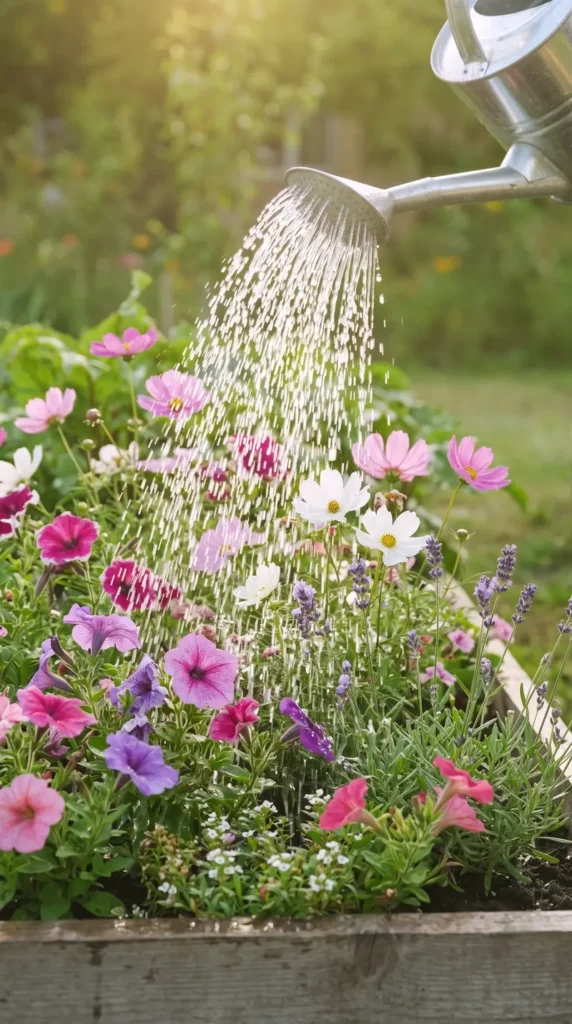
- Early morning is the best watering window for most gardens because the soil absorbs water efficiently, plants are primed to use it, and leaves dry faster (less disease pressure).
- The winning strategy is deep watering + appropriate dry-down, not frequent light sprinkles that train shallow roots.
- Your ideal frequency depends on soil type, weather, plant stage, planting style (ground vs containers), and sun exposure—but you can dial it in quickly using a simple soil-depth check and a one-time irrigation “calibration.”
In This Article
Why Timing Matters More Than Most Gardeners Think
Watering isn’t just about “giving plants a drink” It affects:
- Root depth (deep watering encourages deeper, stronger roots)
- Disease risk (wet leaves overnight are an open invitation for many fungi)
- Water waste (heat + wind can steal a surprising amount to evaporation)
- Plant stress (plants entering a hot day already hydrated handle heat better)
If your garden struggles despite “regular watering,” the problem is often when and how the water is delivered—not the total amount.
The Best Time of Day to Water Your Garden (Plus the Few Exceptions)
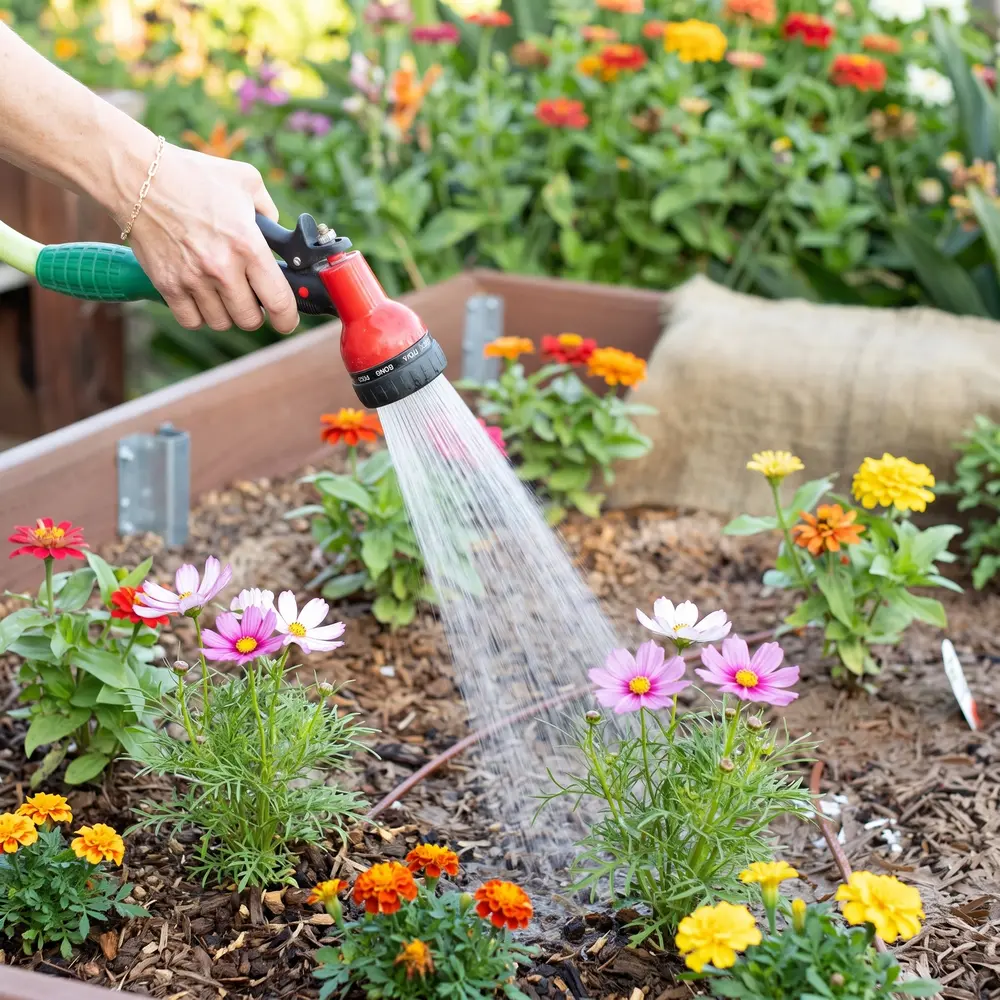
Best overall: Morning (roughly sunrise to mid-morning)
Morning watering tends to win for three reasons:
- Lower evaporation than midday
- Soil absorbs steadily before temperatures climb
- Foliage dries faster, reducing fungal and bacterial leaf problems
If you can only pick one habit that improves a garden fast, it’s this: water early.
Acceptable backup: Late afternoon / early evening (with rules)
This can work when mornings aren’t possible—especially in hot, dry climates—if you follow two rules:
- Water at the base of plants, not over the leaves
- Finish early enough that foliage dries before night
Usually avoid: Night watering
Night watering isn’t automatically “wrong,” but it commonly leads to:
- Prolonged leaf wetness
- Higher risk of mildew, leaf spot, blight, and rot
- Soggy soil that stays cool and oxygen-poor longer
Worst option: Midday watering
Midday is typically inefficient because sun and wind increase evaporation. It can also leave you with wet surface soil but a dry root zone—so plants still suffer later.
Exception (important): If plants are in severe heat stress (wilting hard in extreme heat), an emergency midday watering can prevent damage. In that case, aim water at the soil, use mulch/shade if possible, and return to morning watering the next day.
The Best Time of Day to Water Your Garden (Plus the Few Exceptions)
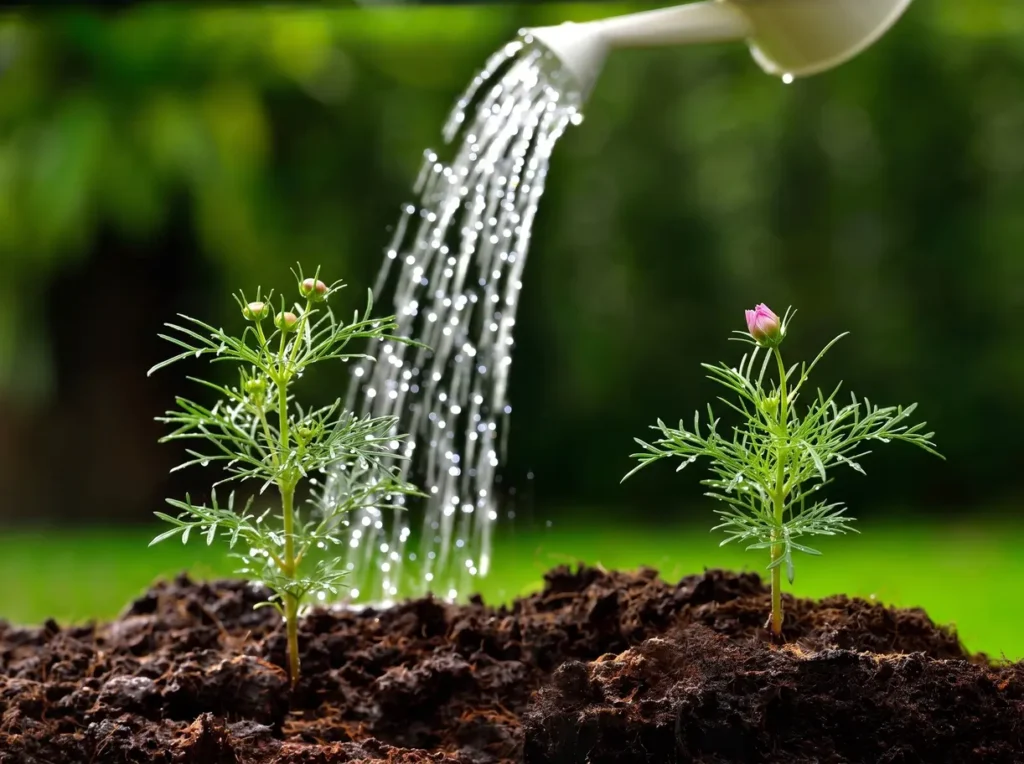
Best overall: Morning (roughly sunrise to mid-morning)
Morning watering tends to win for three reasons:
- Lower evaporation than midday
- Soil absorbs steadily before temperatures climb
- Foliage dries faster, reducing fungal and bacterial leaf problems
If you can only pick one habit that improves a garden fast, it’s this: water early.
Acceptable backup: Late afternoon / early evening (with rules)
This can work when mornings aren’t possible—especially in hot, dry climates—if you follow two rules:
- Water at the base of plants, not over the leaves
- Finish early enough that foliage dries before night
Usually avoid: Night watering
Night watering isn’t automatically “wrong,” but it commonly leads to:
- Prolonged leaf wetness
- Higher risk of mildew, leaf spot, blight, and rot
- Soggy soil that stays cool and oxygen-poor longer
Worst option: Midday watering
Midday is typically inefficient because sun and wind increase evaporation. It can also leave you with wet surface soil but a dry root zone—so plants still suffer later.
Exception (important): If plants are in severe heat stress (wilting hard in extreme heat), an emergency midday watering can prevent damage. In that case, aim water at the soil, use mulch/shade if possible, and return to morning watering the next day.
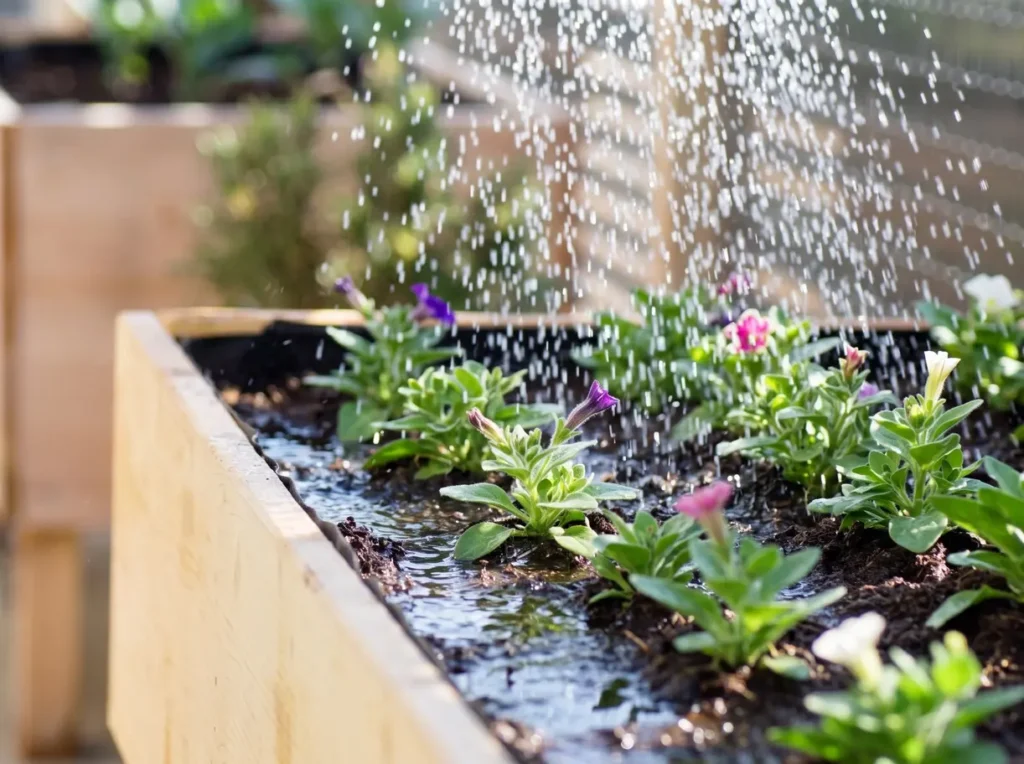
How to Set a Watering Schedule That Fits Your Garden (Not a Generic Rule)
A strong schedule answers two questions:
- How deep does the water need to go? (root zone)
- How long does your soil hold that moisture? (soil + weather)
Step 1: Identify your root-zone target
- Seedlings: top 1–2 inches consistently moist (not soggy)
- Vegetable beds & annual flowers: aim to wet 6–8 inches deep
- Perennials & shrubs: 8–12 inches deep
- New trees: water the root ball and surrounding zone 12–18 inches deep, slowly
Step 2: Learn your soil “personality”
- Sandy soil: drains fast → water more often, shorter intervals, but still thoroughly
- Clay soil: holds water → water less often, but apply slowly (or in cycles) to prevent runoff
- Loam/compost-rich soil: the sweet spot → moderate frequency, excellent results
Step 3: Use the 60-second soil check (the most reliable tool you own)
Before you water, check moisture below the surface:
- Dig a small hole 4–6 inches deep with a trowel, or use a soil probe/skewer.
- If it’s cool and slightly damp, you can usually wait.
- If it’s dry and dusty at that depth, it’s time to water.
Surface dryness alone is misleading—especially with mulch.
Step 4: Adjust for “drying accelerators”
Even perfect soil dries quickly when you have:
- Full sun all day
- Wind exposure
- Raised beds
- Containers (they dry fastest)
- Big leafy plants that transpire heavily (squash, cucumbers, tomatoes)
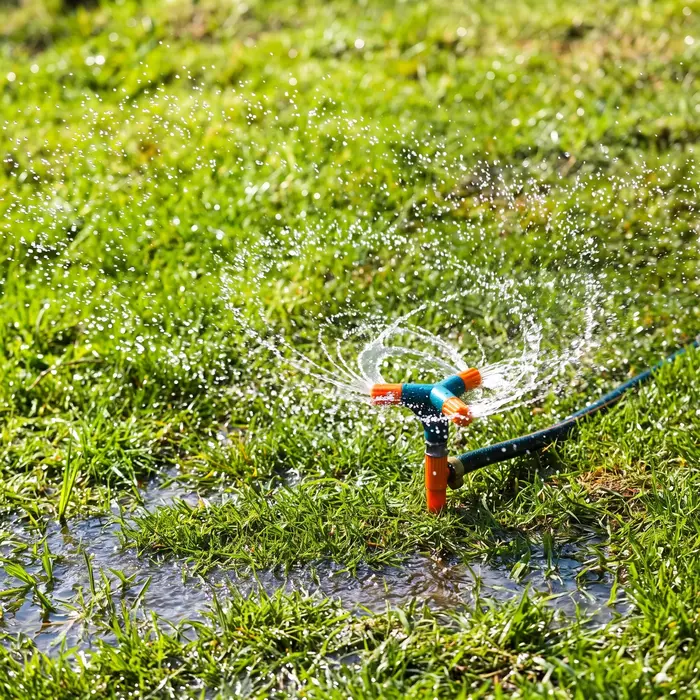
How Often to Water: Practical Guidelines (Start Here, Then Confirm with the Soil Check)
Established in-ground beds (average summer conditions)
- Most vegetable gardens: 2–3 times per week (deep watering)
- Flower beds: 1–2 times per week (deep)
- Shrubs: about once weekly in dry spells (deep)
- Trees: deep watering less frequently, but longer sessions (especially newly planted)
Seedlings and new transplants (first 10–14 days)
- Water more often, because roots are shallow and limited.
- Goal: keep the immediate root zone evenly moist—not saturated.
Containers and hanging baskets
- Typical: every 1–3 days
- Hot/windy weeks: daily is common
Container plants don’t have “backup moisture” the way in-ground plants do.
A simple weekly benchmark (useful, not absolute)
Many gardens do well around ~1 inch of water per week (from rain + irrigation), but:
- Productive vegetable beds in peak growth often need more
- Drought-tolerant landscapes need less
- Your soil and heat load determine whether “1 inch” is enough
Pro tip: Put out a cheap rain gauge. It removes guesswork immediately.
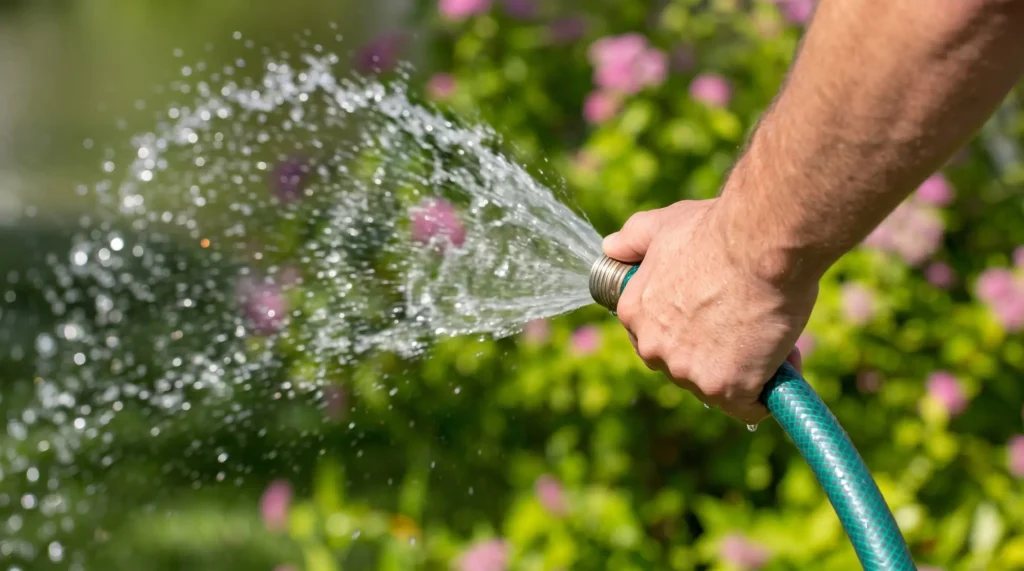
The Deep Watering Method (and How Long to Run Irrigation)
What “deep watering” actually means
Deep watering means applying water slowly enough that it moves downward into the root zone instead of running off or only wetting the surface.
Calibrate once—then watering becomes easy
For sprinklers:
- Place several straight-sided cups/tuna cans around the area.
- Run the sprinkler for 15 minutes.
- Measure the water collected and calculate how long it takes to apply ½ inch or 1 inch.
For drip lines/soaker hoses:
- Run a test session (30–60 minutes), then dig a small check hole to see how deep the moisture traveled.
- Adjust runtime until you consistently reach your target depth.
If you have clay soil or a slope: use “cycle and soak”
Instead of one long run that creates runoff:
- Water 10–15 minutes
- Pause 30–60 minutes
- Repeat 2–3 cycles
This gives water time to infiltrate.
Make Watering Easier (and More Water-Smart)
1) Mulch is a watering tool (not just decoration)
A 2–3 inch layer of mulch can drastically reduce evaporation and smooth out soil moisture swings.
- Keep mulch a couple inches away from stems/trunks to prevent rot.
2) Group plants by water needs (hydrozoning)
Put thirstier plants together (vegetables, hydrangeas) and drought-tolerant plants together (lavender, rosemary, many natives). This prevents overwatering one group while saving another.
3) Switch to drip for beds where possible
Drip irrigation:
- Puts water at the root zone
- Keeps foliage drier
- Uses water more efficiently than overhead spraying
- Pairs perfectly with a timer for early-morning automation
4) Use a timer to “win mornings” without waking up early
A simple battery timer turns good intentions into consistency—especially during heat waves.
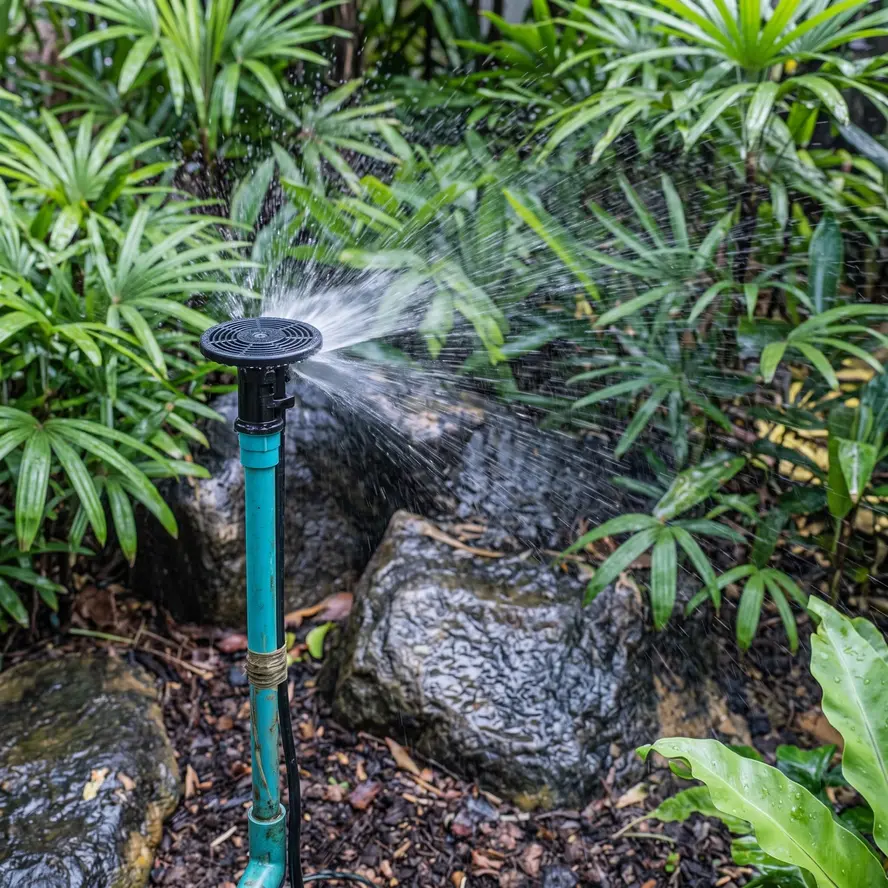
Signs You’re Overwatering vs. Underwatering (and the Fast Fix)
Overwatering signs (common in clay soil and containers)
- Yellowing leaves with a soft, heavy look
- Soil that stays wet for days
- Mushy stems near soil line
- Slow growth, weak flavor in herbs
- Fungus gnats around containers
Fast fix: pause watering, improve drainage/aeration, water less often but more deliberately. If containers stay wet, consider a repot into a freer-draining mix.
Underwatering signs
- Morning wilt (not just late-day heat droop)
- Dry, cracked soil; mulch pulling back
- Crispy leaf edges; leaf drop
- Small fruit, blossom drop in vegetables
Fast fix: deep soak to root depth, then mulch and adjust frequency. For hydrophobic (water-repelling) potting mix, bottom-soak containers for 20–30 minutes.
FAQs
Is it ever okay to water at night?
If you’re watering the soil (not the leaves) and your climate is dry enough that foliage doesn’t stay wet long, it can work. But if you frequently battle mildew or leaf spot, night watering makes life harder.
Should I water a little every day?
For most established in-ground plants, daily light watering encourages shallow roots. Daily watering is mainly for containers and newly planted seedlings/transplants, or during extreme heat.
How do I know if I watered “enough”?
Check depth. Dig 4–6 inches down (more for shrubs/trees). If only the surface is damp, you didn’t reach the root zone.
What about watering lawns (if you cover that topic too)?
Lawns usually perform better with infrequent, deeper watering (to encourage deeper roots) rather than frequent light watering—especially in summer.