Strawberry Plants Not Fruiting ? Use This Quick Diagnosis to Get Berries Faster
By Ashley Chalmers | Published on July 28, 2026
Key Takeaways
- The fastest way to solve poor strawberry production is to diagnose what’s missing : flowers, pollination, or fruit development.
- Strawberries need high light (6–10+ hours), steady moisture, and the right nutrition balance too much nitrogen often makes beautiful leaves with few berries.
- Many plantings naturally decline after a few seasons; keeping a productive patch often means renewing plants regularly and preventing overcrowding.
In This Article
First : Identify the Type of Strawberry (This Changes Fruiting Expectations)
Before you “fix” anything, confirm what you planted:
- June-bearing : One main crop (late spring/early summer). They form next year’s flower buds in late summer/fall. Anything that stresses them then (shade, drought, excess nitrogen) can reduce next year’s harvest.
- Everbearing : A couple of flushes through the growing season (often spring and late summer/fall).
- Day-neutral : Can flower and fruit repeatedly when temperatures are favorable, often the best choice for containers and long seasons.
If you expect constant berries from June-bearers, you’ll always feel like something is “wrong” when it’s often just their normal rhythm.
A 60-Second Diagnosis (Do This Before You Fertilize or Dig Anything Up)
Scenario A : Lots of leaves, but few/no flowers
Most likely causes :
- Not enough sun
- Too much nitrogen
- Plants too young (or recently transplanted)
- Wrong variety for your climate (chilling requirement not met)
- Crowding or stress the previous late summer/fall (June-bearers)
Scenario B : Flowers appear, but berries don’t form (or abort)
Most likely causes :
- Frost/cold injury to blossoms
- Poor pollination (especially in covered patios/greenhouses)
- Heat stress during bloom or early fruiting
- Water swings (too dry then too wet)
- Disease/pest damage to buds/flowers
Scenario C : You get fruit, but it’s tiny or misshapen
Most likely causes :
- Incomplete pollination
- Overcrowded plants
- Potassium too low at fruiting
- Inconsistent water
- Plants past peak productivity
10 Reasons Strawberry Plants Aren’t Fruiting (and How to Fix Each One)
1) The planting is past its peak
Strawberries are perennials, but heavy production doesn’t last forever. Many home patches produce best for a limited window, then decline as crowns age and diseases build.
What you’ll see
- Fewer flower stalks
- Smaller berries
- More runners, less fruit
Fix
- Start new plants from healthy runners (or buy certified disease-free plants) and rotate the patch if possible.
- Keep a “young bed” coming along so you’re never stuck with only old plants.
2) The plants are too young (or were recently set out)
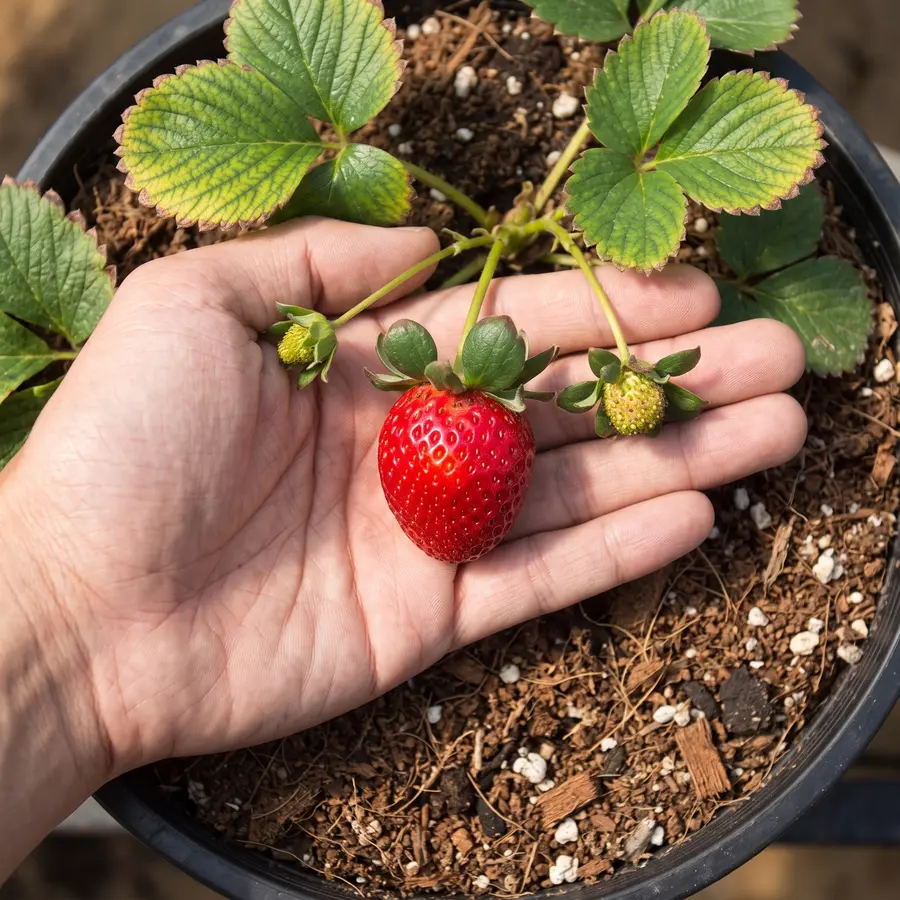
New transplants often focus on roots first. Some types will fruit lightly the first year, but many perform best after establishment.
Fix
- Prioritize root establishment : consistent moisture, full sun, and light feeding.
- Don’t expect maximum yield immediately especially from spring-planted June-bearers.
3) Not enough direct sun (the most underestimated cause)
Strawberries are sun-loving. In shade they can survive, but fruiting suffers first.
What you’ll see
- Lush foliage but few flowers
- Long petioles (leaf stems) reaching for light
- Slow growth and weak bloom
Fix
- Move containers to the sunniest spot you have.
- In beds, prune or relocate anything that shades the patch.
- Aim for 6–10+ hours of direct sun for best results.
4) Too much nitrogen = leaves instead of berries
Nitrogen drives leafy growth. If your fertilizer is lawn-type or high-N, fruiting often drops.
What you’ll see
- Big green plants, few blooms
- Soft growth that’s more pest-prone
Fix
- Stop high-nitrogen feeding during bloom/fruit set.
- Switch to a more fruit-friendly approach: compost + a balanced or lower-N fertilizer, and ensure potassium isn’t lacking. Many gardeners use a “tomato-style” fruiting feed once buds appear because it’s formulated for flowering/fruiting rather than leaf production.
5) Poor pollination (especially in patios, balconies, or under covers)
Strawberries are usually self-fertile, but they still need pollen moved around by bees, wind movement, or you.
What you’ll see
- Flowers look normal, but berries don’t form
- Misshapen berries (one side small or “seedy”)
Fix
- Encourage pollinators: nearby blooms, avoid spraying insecticides during flowering.
- If growing indoors/under a cover: gently tap flower clusters daily or brush flowers with a soft paintbrush to move pollen.
6) Frost or cold snaps damaged the blossoms
A strawberry flower can look fine after a cold night but still be ruined inside.
What you’ll see
- Blossoms open, then no fruit forms
- Darkened/blackened centers in flowers after cold nights
Fix
- Cover plants on cold nights during bloom (frost cloth, row cover, even an old sheet in a pinch—remove in the morning).
- In containers, move pots against a warmer wall or into shelter overnight.
7) Heat stress during flowering or early fruiting
High heat can reduce pollen viability and cause blossoms or tiny fruit to abort, especially in exposed containers.
What you’ll see
- Flowers drop
- Tiny fruit forms then stops
- Plants wilt despite watering
Fix
- Water early and deeply; mulch to keep roots cooler.
- Provide light afternoon shade during extreme heat (shade cloth works well).
- Day-neutral varieties often pause in very high temperatures and resume when it cools.
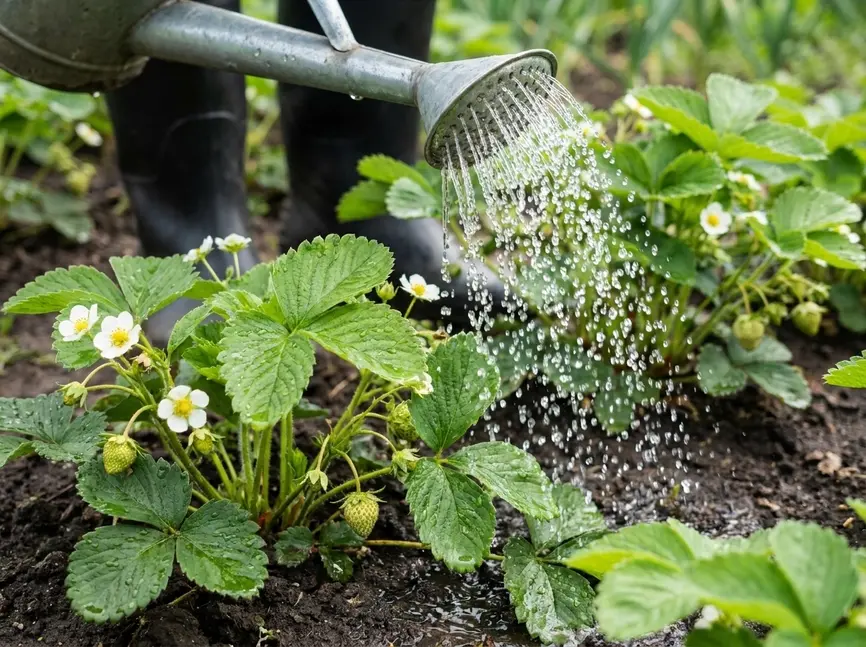
8) Watering is inconsistent (or drainage is poor)
Strawberries like even moisture, not extremes. Drought stress reduces flowers; waterlogged soil reduces roots and invites rot.
What you’ll see
- Underwatering : droop, dry soil, small fruit, flowers dropping
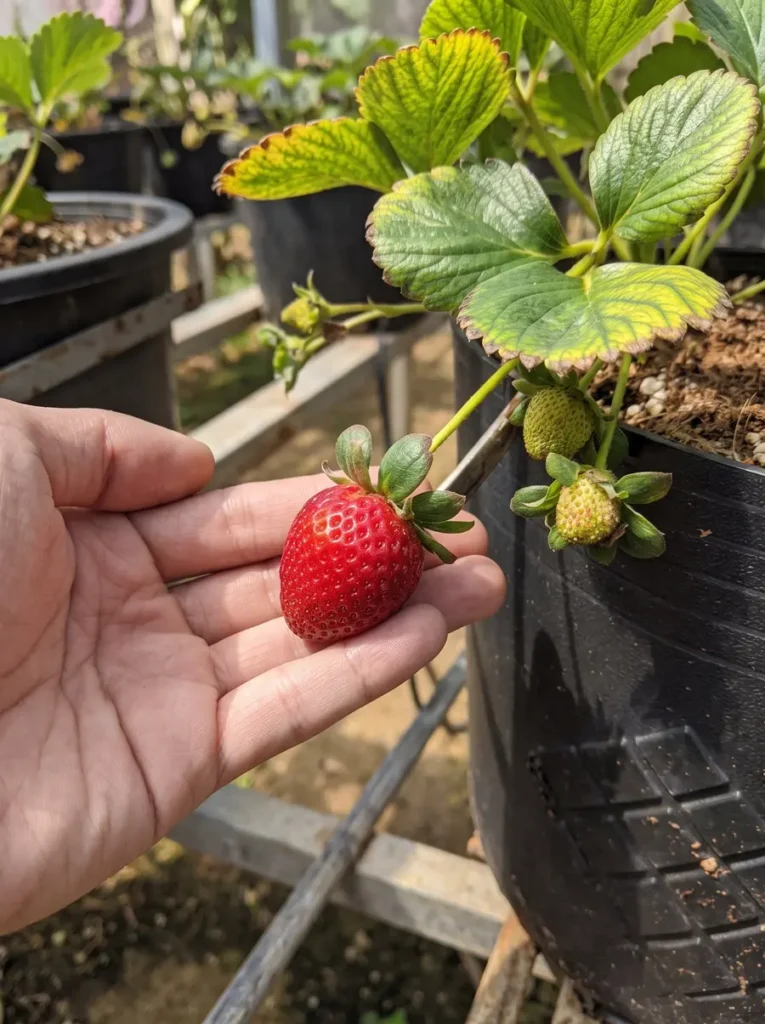
- Overwatering: yellowing, limp leaves, slow growth, crown/root issues
Fix
- Target roughly 1 inch of water per week (more in heat, less in rain), and keep soil evenly moist not soggy.
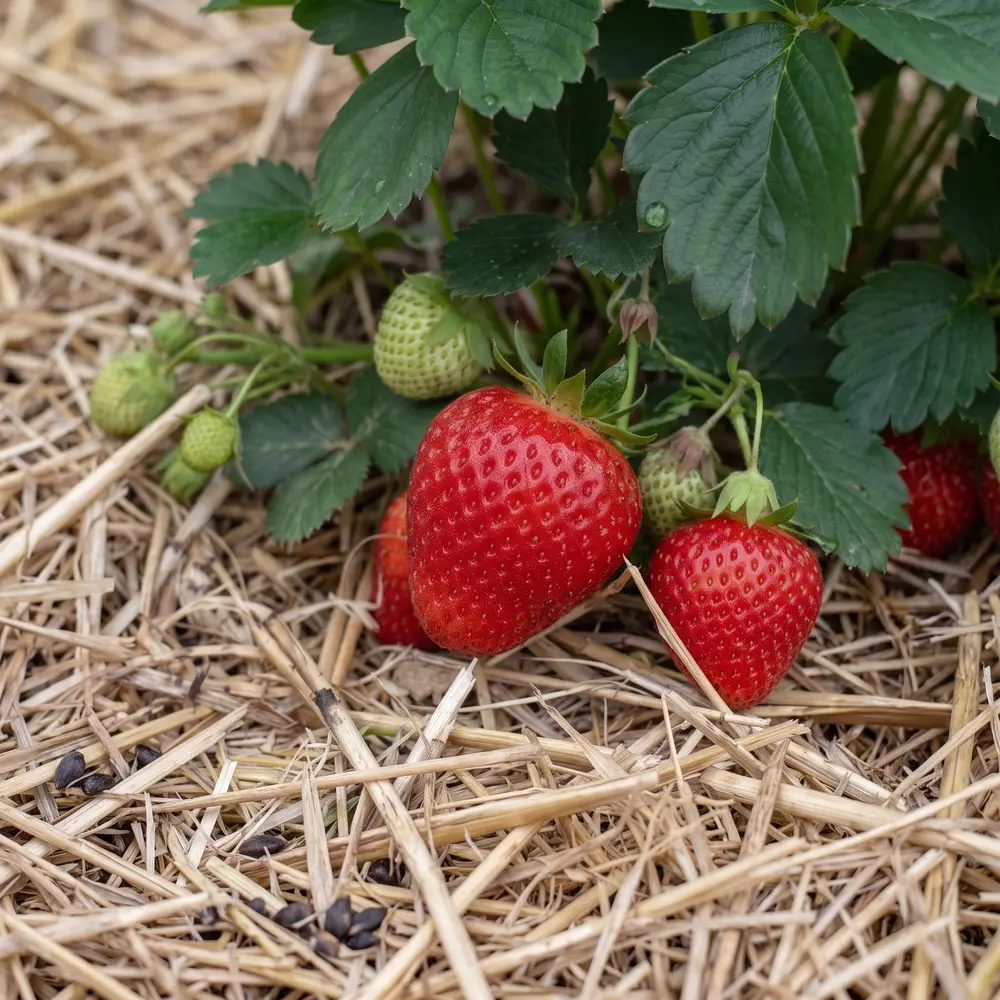
- Mulch with clean straw or shredded leaves to stabilize moisture and keep berries clean.
- Ensure containers drain freely; never let pots sit in water.
9) Crowding and runner chaos
Strawberries spread. That’s good until it becomes a crowded mat that shades itself and competes for water and nutrients.
What you’ll see
- Many runners, fewer fruiting crowns
- Smaller berries
- Increased disease pressure due to poor airflow
Fix
- Thin plants to give crowns room and light.
- In fruiting season, remove excess runners so energy goes into berries.
- Use runners intentionally: root a few healthy ones to replace older plants.
10) Climate/variety mismatch (chilling requirement issues)
Some strawberries need a certain amount of cool weather to set buds properly. In warm-winter regions, the wrong variety may grow leaves but set few flowers.
What you’ll see
- Healthy plants with disappointing bloom in mild winters
Fix
- Choose varieties suited to your region (ask local nurseries/extension recommendations).
- If you’re in a warm climate, prioritize varieties bred for low chill and long seasons.
“Fix It Fast” Action Plan (What to Do This Week)
- Confirm sun : move pots or clear shade; aim for the sunniest available exposure.
- Stop high-N fertilizer if you’re near bloom/fruiting; switch to a fruiting-friendly feed.
- Stabilize watering : deep, consistent moisture + mulch.
- Check flowers : if you have blooms but no berries, focus on pollination + temperature protection.
- Thin runners during fruiting; keep plants open to light and airflow.
How to Set Up Next Season for a Bigger Harvest
- Renovate/refresh : keep young plants coming (runners or new starts), and avoid letting beds become crowded.
- Feed at the right time : more balanced nutrition early; avoid heavy nitrogen later when buds are forming (especially for June-bearers).
- Protect bloom time : plan a simple cover strategy for late frosts and a shade plan for heat waves.
- Rotate or refresh soil in containers yearly and consider new potting mix to reduce disease buildup.
FAQs
Why are my strawberry plants huge but not flowering ?
Most commonly : not enough sun or too much nitrogen. Also check variety timing June-bearers won’t fruit continuously.
Do I need two strawberry plants for fruit ?
Usually no—most strawberries are self-fertile. But you may still need pollinator activity (or manual pollination) for full, well-shaped berries.
Should I let runners grow ?
During heavy fruiting, remove most runners so plants put energy into berries. Use runners later to create replacement plants and keep your patch productive.