How to Make a Rock Garden That Looks Natural (and Stays Low-Maintenance)
By Ashley Chalmers | Published on July 28, 2026
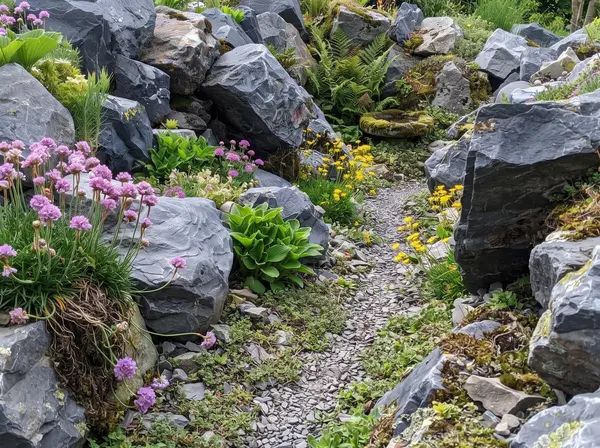
Key Takeaways
- The secret to a great rock garden is drainage + stone placement: set large rocks first, bury them partially, then build planting pockets around them.
- Most rock-garden plants prefer lean, fast-draining soil. Too much rich compost often leads to floppy growth and winter rot.
- For planted rock gardens, skip plastic barriers; instead prevent weeds by thorough prep + gravel top-dressing + tight plant spacing.
In This Article
What Is a Rock Garden ?
A rock garden is a landscaped planting area where stone is a structural design element, not just a top layer. Rocks create microclimates warm crevices, cool shaded sides, and sharp drainage zones where the right plants thrive with minimal watering once established.
Rock garden vs gravel bed :
- A rock garden uses stones/boulders as “bones” and plants as accents.
- A gravel garden is mostly gravel with plants spaced through it (often great for drought-tolerant perennials).
You can blend both styles, but the build details differ especially underneath.
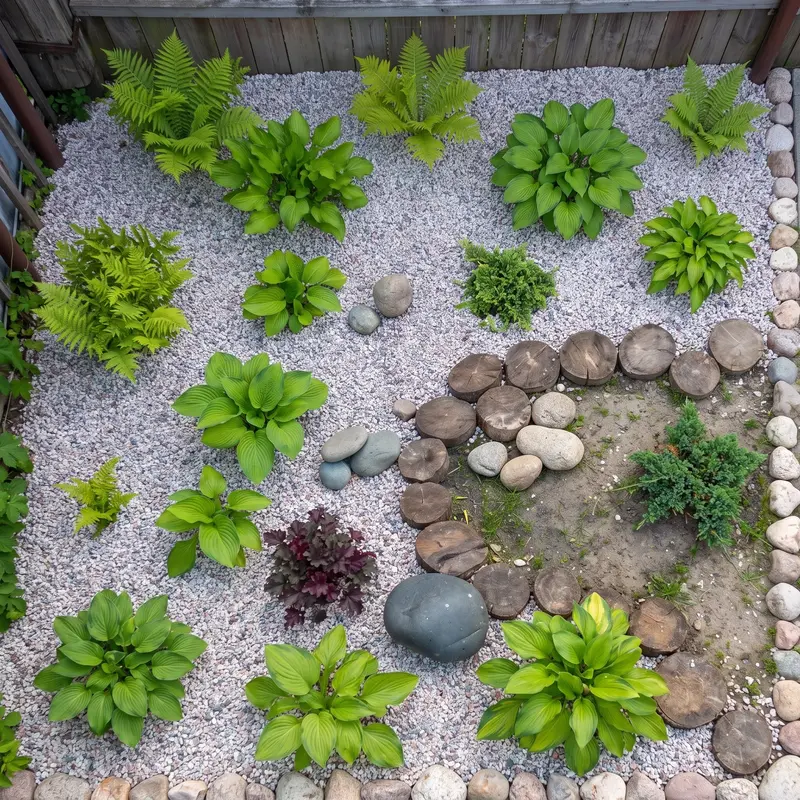
Best Types of Rock Gardens (Choose Your Style)
Mounded / Berm Rock Garden
Best for flat yards with heavy soil. You raise the planting area for better drainage.Naturalistic Boulder Rock Garden
A few large stones placed to look “found” with plants tucked into pockets. Great focal point.Hillside / Terraced Rock Garden
Uses stone to stabilize slopes and slow water runoff. Excellent for erosion-prone sites.Desert-Inspired Rock Garden
Gravel, warm-toned stone, succulents/cacti (where hardy), and architectural plants.Zen-Style Dry Garden
Raked gravel with minimal plants and carefully positioned rocks more contemplative than botanical.
Planning : Get These 3 Things Right Before You Lift a Rock
1) Pick the right spot (sun + sightline)
Most classic rock-garden plants want full sun. Choose a spot you’ll see from a window, patio, or walkway—rock gardens shine as “sculpture with plants,” not hidden in the back corner.
2) Fix drainage first (this is where most rock gardens fail)
Do a quick test : dig a hole 12 inches deep, fill with water, and see how long it takes to drain.
- Drains within a few hours : you can build at grade.
- Stays wet a long time : build a berm, amend for drainage, or install a drain solution.
Important soil note : mixing lots of sand into clay can make a dense, brick-like texture. For heavy soils, improve drainage with raised shaping + grit/pumice + compost in moderation.
3) Choose stone like a designer (not like a shopper)
A rock garden looks cohesive when stone is consistent.
- Use one main rock type (granite, limestone, sandstone, etc.) and keep colors similar.
- Mix sizes : boulders (anchor), medium rocks (structure), gravel (finish).
- Place rocks so they look settled : bury about 1/3 of each large rock. Stones sitting on top of soil look unnatural and shift over time.
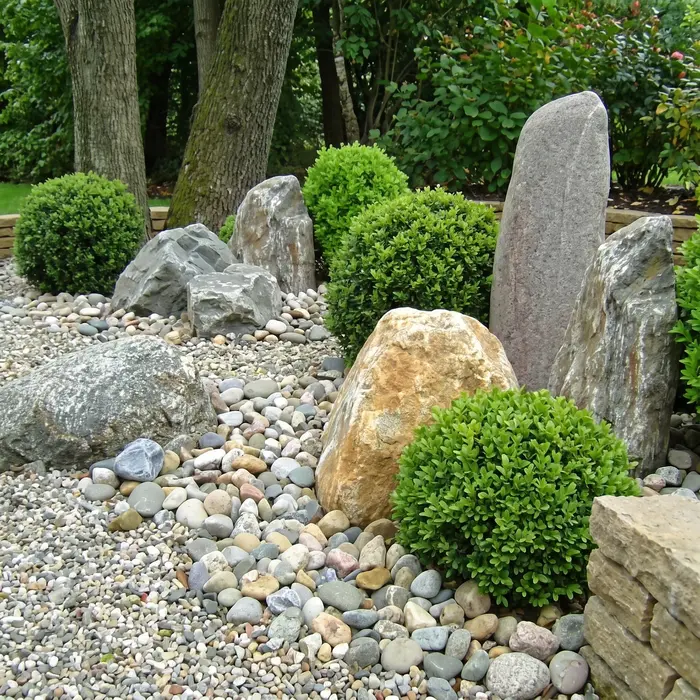
Step-by-Step : How to Build a Rock Garden (Beginner-Friendly, Pro Results)
What You’ll Need
Tools : shovel, spade, steel rake, tamper (or your feet), wheelbarrow, level (helpful), gloves
Materials : stones/boulders, gravel or grit, soil components, plants, drip line/soaker hose (optional)
Step 1 : Sketch a simple plan at the actual site
Use a hose or marking paint to outline the shape. Curves usually look more natural than perfect circles unless you’re going for a formal look.
Design rule that works: choose 1–3 “feature rocks” (largest), then support them with smaller stones so the composition reads as intentional.
Step 2 : Strip the area clean (weeds + sod)
Remove grass and roots thoroughly. This is the difference between “low maintenance” and “weeding forever.”
If you have aggressive weeds (like runners), dig them out carefully rather than burying them.
Step 3 : Create drainage structure (especially on clay)
Choose one approach:
Option A — Berm method (most reliable on heavy soil) :
- Mound the area 6–12 inches higher than surrounding grade.
- Shape it so water doesn’t pool.
Option B — In-ground with drainage layer (for moderate soils) :
- Loosen soil 8–12 inches deep.
- Add drainage amendment (grit/pumice) and blend.
Step 4 : Place the big rocks first (before soil finishing)
Set your largest stones while the area is open and easy to adjust.
- Dig a shallow “seat” so each boulder is stable.
- Tilt and nest rocks so they look like they belong together.
- Step back often—rock gardens are built with your eyes as much as your shovel.
Pro tip : avoid evenly spaced boulders. Grouping looks natural; symmetry often looks staged.
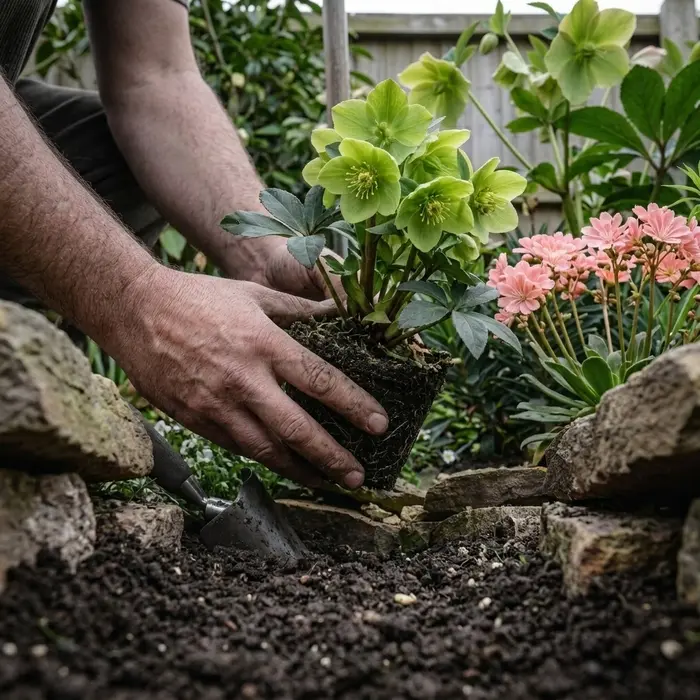
Step 5 : Build planting pockets with the right soil mix
Most rock garden plants prefer a lean mix that drains fast.
A dependable general recipe for many sunny rock gardens:
- 40–60% mineral (grit, crushed gravel, pumice, perlite choose what’s available)
- 30–50% topsoil
- 10–20% compost (enough for establishment, not so much that it stays wet)
Fill in around rocks, tamp lightly, and create pockets/crevices where roots can dive down.
Step 6 : Arrange plants in place (before you dig holes)
Set plants on top of the soil while still in their pots and adjust until it looks balanced.
Aim for :
- Evergreen structure (small shrubs or tufted grasses)
- Mat-formers to spill over rocks and soften edges
- Seasonal accents for flowers and color bursts
Step 7 : Plant, then lock the surface with gravel
Plant into pockets, firm soil gently, then top-dress with gravel (not bark mulch) for most rock gardens.
- Gravel suppresses weeds, reduces soil splash, and keeps crowns drier (important for many alpine/succulent types).
- Keep gravel away from delicate stems, but cover open soil.
Water thoroughly once to settle everything, then adjust watering based on weather and plant type.
Sample Rock Garden Layouts (Simple, High-Impact)
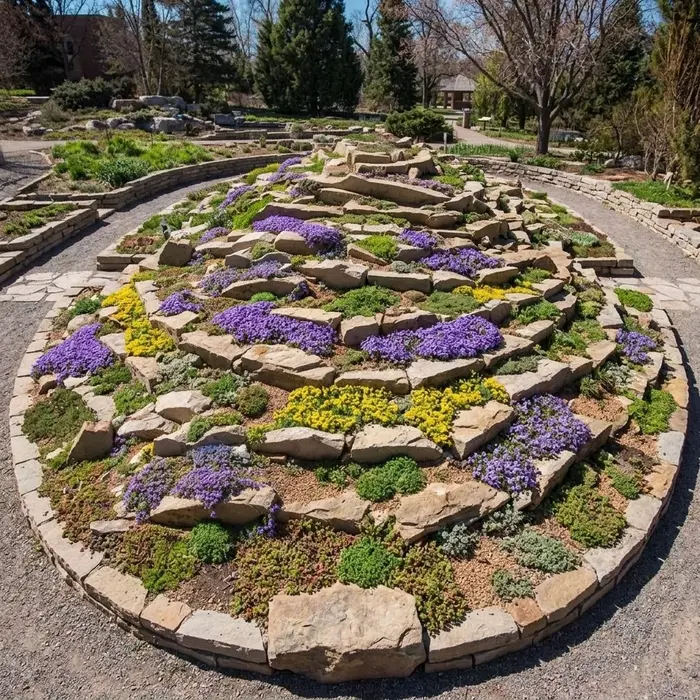
Sample Design 1: Sunny 6′ x 8′ Rock Garden (low-water look)
Structure
- 1 large feature boulder slightly off-center
- 2 medium rocks nearby to form a “triangle”
- Gravel top-dress over planting pockets
Planting idea (mix heights + textures)
- Mat-formers : creeping thyme, sedum (stonecrops), creeping phlox
- Rosettes : hens-and-chicks (Sempervivum)
- Tufts : blue fescue or other small ornamental grass
- Flower accents : dianthus, dwarf iris, allium (in pockets)
This layout gives year-round structure, spring bloom, and strong summer texture.
Sample Design 2 : Part-Shade Rock Garden (woodland edge style)
Not all rock gardens are “sun and dry” In shade, rocks create cool pockets and visual structure.
Structure
- Stones positioned to create small terraces and a path edge
- More organic matter in the soil than a sun rock garden, but still well-drained
Planting idea
- Texture base : ferns (shade-tolerant varieties), heuchera (coral bells)
- Groundcovers : ajuga or other non-invasive local groundcovers
- Seasonal color : spring bulbs tucked between rocks (where suitable)
Maintenance : What to Do So It Looks Better Every Year
First season
- Water deeply during establishment (especially during hot, dry stretches).
- Hand-pull weeds while small—seedlings in gravel remove easily if caught early.
Each year
- Top up gravel where it thins.
- Trim or divide plants that creep too far over slower neighbors.
- Re-seat any stones that shift after freeze/thaw or heavy rain.
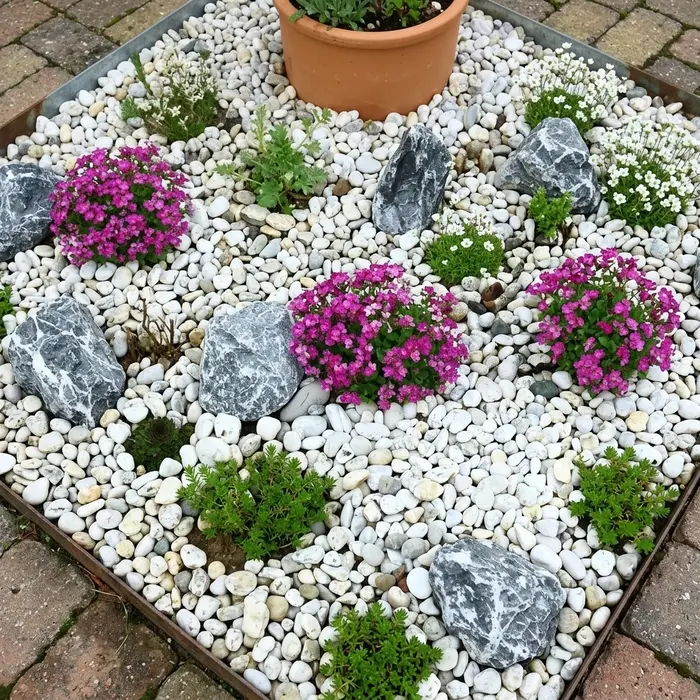
A well-built rock garden usually becomes less work over time as plants knit together and shade out open soil.
FAQs
Should you put landscape fabric under a rock garden ?
For planted rock gardens, fabric often causes problems long-term : soil and organic debris build up on top, weeds sprout anyway, and plant expansion becomes awkward. Fabric is most useful under gravel paths or pure stone areas where you won’t plant through it.
Do you need sand to make a rock garden ?
Not necessarily. Many rock gardens do better with angular gravel/grit/pumice for drainage rather than lots of sand—especially if you have clay soil.
How deep should a rock garden be ?
It depends on the rocks and plants. A good target is 8–12 inches of improved planting zone, plus deeper “seats” for large stones. Bigger boulders should be set into the soil so they’re stable.
What’s the best time of year to build one ?
Spring or early fall are ideal cooler weather helps plants establish roots without constant stress.