Are Spider Plants Safe for Cats ? Everything You Need to Know
By David Sullivan | Published on June 23, 2026
Key Takeaways
- Spider plants are considered non-toxic to cats (commonly listed as non-toxic by major pet safety resources such as the ASPCA).
- Non-toxic doesn’t mean “edible without consequences”: chewing a lot of spider plant can still cause vomiting, drooling, or diarrhea from stomach irritation.
- Most problems come from repeated nibbling (and from cats accidentally eating a different toxic plant). Prevention is about placement + alternatives + consistency.
In This Article
Are Spider Plants Toxic to Cats (Official Safety Status)
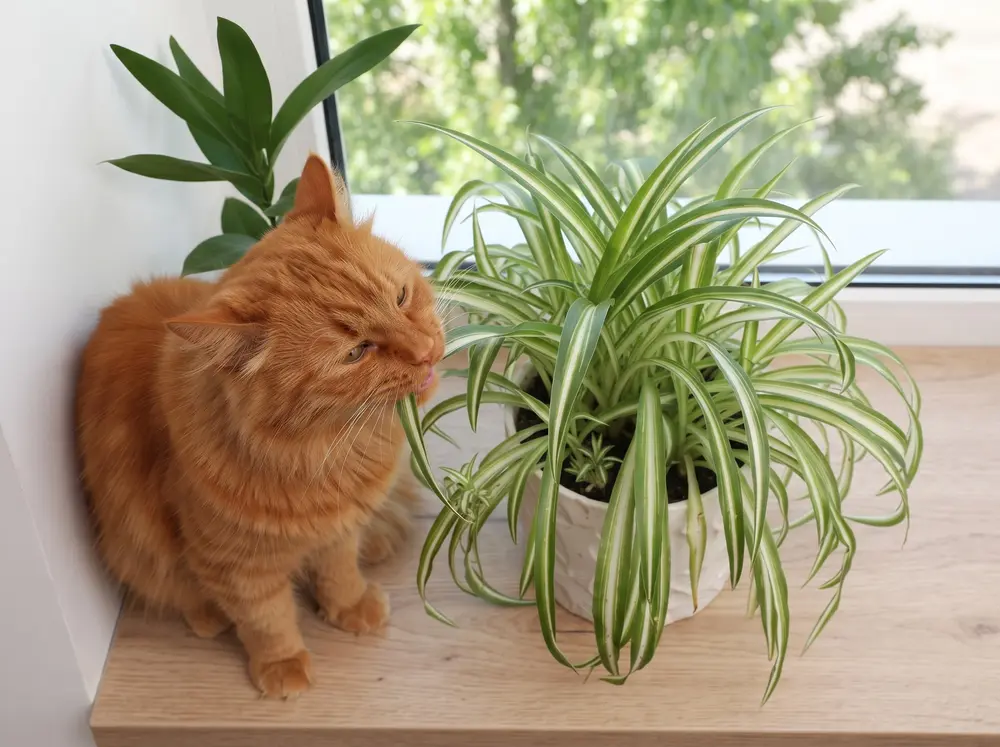
If you’re asking, “Are spider plants toxic to cats ?” the reassuring answer is : spider plants (Chlorophytum comosum) are widely considered non-toxic to cats and dogs, including by the ASPCA’s commonly referenced toxic/non-toxic plant lists.
That said, “non-toxic” is not the same as “safe to let your cat snack freely” Cats aren’t built to digest large amounts of plant fiber, and even non-toxic plants can upset their stomach.
What Happens If a Cat Eats a Spider Plant ?
In most cases, if your cat chews a spider plant, you may see no symptoms at all especially if they only took a few bites.
If your cat eats a larger amount, common (usually mild) effects include :
- Vomiting (one-time or occasional)
- Drooling
- Soft stool or diarrhea
- Reduced appetite for a short period
- Gagging if a long leaf blade irritates the throat (less common)
Why can a “non-toxic” plant still cause vomiting ?
Spider plant leaves are long, fibrous, and mildly irritating when eaten in quantity. The issue is typically mechanical irritation (like eating too much grass), not poisoning.
Important caution
If you have multiple houseplants, don’t assume spider plant is the only one your cat touched. Many toxic plants can cause symptoms that look similar at first. If you’re not 100% sure what was eaten, treat it more seriously and contact your vet.
When It’s an Emergency (Red-Flag Symptoms)
Even though the answer to “are spider plants toxic to cats” is generally “no” you should contact your veterinarian (or an animal poison hotline) urgently if you notice :
- Repeated vomiting (more than once or twice, or ongoing)
- Lethargy, weakness, or collapse
- Tremors, wobbliness, or seizures
- Difficulty breathing
- Swelling of the face/mouth, hives, or severe drooling
- Refusal to drink, signs of dehydration
- Blood in vomit or stool
These signs may indicate :
- your cat ate a different toxic plant,
- a foreign-body issue (swallowed plant material), or
- another medical problem that needs attention.
Safety move: take a photo of the plant(s) your cat could access and keep a small sample. This helps a vet identify risks faster.
Why Do Cats Like Spider Plants So Much ?
Cats target spider plants for a few very specific reasons :
They move like prey or a toy
The long arching leaves and dangling “spiderettes” swing when touched perfect for batting and pouncing.They mimic grass
Indoor cats often chew plants the way they chew grass outdoors.They can be oddly “rewarding”
Some owners report cats become extra interested in spider plants compared with other foliage. There’s a long-running idea that spider plants may contain mildly attractive compounds for cats. Whether or not that effect is strong, the behavior is real: the plant’s shape and movement are extremely tempting.
How to Stop Your Cat From Eating Your Spider Plant (Realistic Solutions)
If you want to keep spider plants and keep your cat safe, the goal is to reduce access and replace the “reward” with a better option.
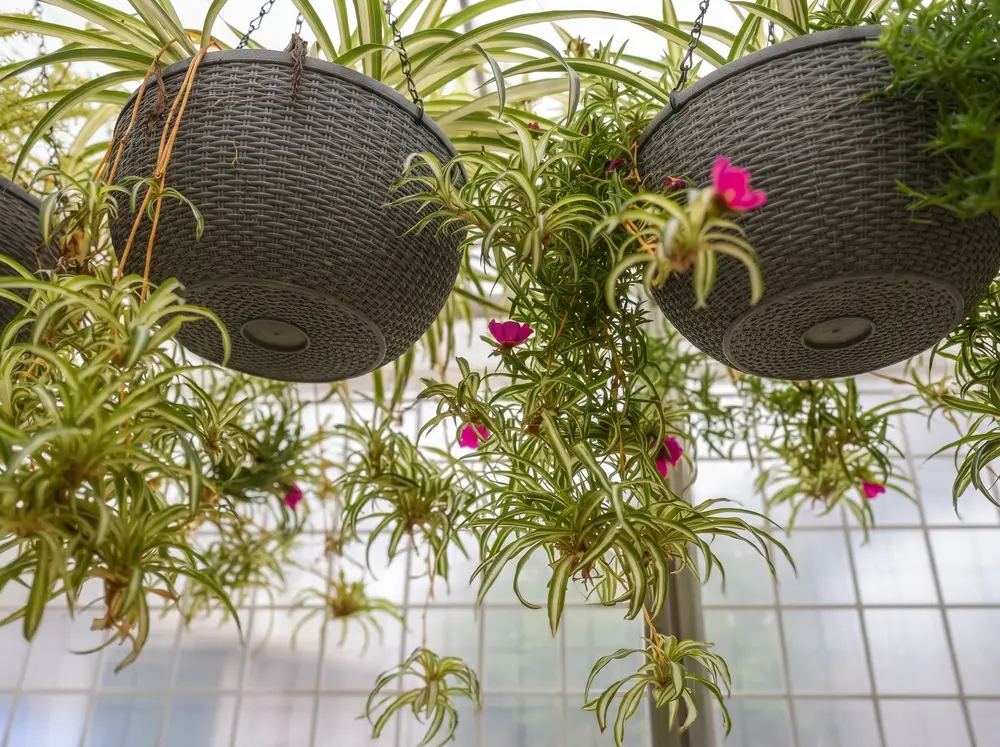
1) Use the right placement (hanging isn’t always enough)
Hanging planters work only if :
- the plant is not near launch points (shelves, couches, cat trees)
- the leaves and babies don’t dangle within reach
If your cat is athletic, assume they can reach higher than you think.
Better option : place the spider plant in a room your cat can’t access, or use a closed-door office/bedroom as the “plant zone”
2) Offer a legal alternative : cat grass
If your cat wants greens, give them greens that are meant for chewing :
- Cat grass trays (often wheatgrass/oat grass)
- Catnip (some cats love it, some don’t)
Place cat grass near the usual “crime scene” so it competes with the spider plant.
3) Reduce dangling triggers
Spiderettes are basically cat toys. If your plant throws lots of babies :
- Trim off plantlets and propagate them elsewhere (or gift them)
- Keep the mother plant “tidier” to reduce motion and temptation
4) Add physical barriers (simple but effective)
- Put the plant inside a decorative cage-style stand
- Use a glass cloche or clear barrier for tabletop plants
- Place pots inside a larger, heavy planter that’s harder to tip
5) Training strategy that works (consistency matters)
- Interrupt chewing calmly (no yelling, no chasing)
- Redirect to a toy immediately
- Reward the redirect behavior
Cats repeat what works. If chewing gets attention or feels stimulating, it becomes a habit.
6) Avoid risky deterrents
Some deterrents can harm cats or plants. Avoid spraying leaves with anything questionable. If you use a commercial pet-safe bitter spray, test it on a small leaf first (some plants spot or discolor).
Best “Approved” Plants for Cats to Nibble
If nibbling is the issue, it’s often easier to give permission in one place than fight it everywhere.
Good options :
- Cat grass (best overall)
- Catnip (best for play/interest)
- Spider plant (non-toxic, but still best not used as a salad bar)
Other Houseplants That Are Safe for Cats
If pet safety is a priority, these are commonly listed as cat-safe choices :
- Spider plant (Chlorophytum comosum)
- Prayer plant (Maranta leuconeura)
- Many orchids (family Orchidaceae)
- Boston fern (Nephrolepis exaltata)
- African violet (Saintpaulia)
- Chinese money plant (Pilea peperomioides)
- Bromeliads (family Bromeliaceae)
- Haworthia (Haworthia spp.)
(Always verify the exact plant species common names get mixed up)
Plants That Are Toxic to Cats (Common Ones to Avoid)
If you keep any of these, use strict separation (or skip them entirely) :
- Lilies (very dangerous to cats)
- Pothos (Epipremnum aureum)
- Snake plant (Dracaena trifasciata)
- Aloe vera (Aloe barbadensis miller)
- Sago palm (Cycas revoluta)
- English ivy (Hedera helix)
- Tulips and daffodils (bulbs especially)
If your cat is a known chewer, choosing a pet-safe plant list is the simplest long-term solution.
FAQs
Are spider plants toxic to cats or dogs ?
Spider plants are widely considered non-toxic to both cats and dogs, including by the ASPCA.
Why did my cat throw up after eating a spider plant ?
Most often it’s stomach irritation from chewing fibrous leaves (similar to grass). If vomiting repeats or your cat seems unwell, contact your vet especially if other plants are accessible.
Should I remove my spider plant if my cat keeps chewing it ?
If chewing is frequent, yes—either move the plant completely out of reach or switch to cat-safe plants that your cat ignores. Repeated nibbling can keep causing GI upset and can destroy the plant.
What should I do right now if my cat ate a spider plant ?
- Remove plant access
- Check for symptoms over the next several hours
- Confirm your cat didn’t chew a different plant
- Call your vet if symptoms are severe, repeated, or you’re unsure what was eaten