Snake Plant (Dracaena trifasciata) Care Guide : How to Make It Thrive, Not Just Survive
By David Sullivan | Published on June 15, 2026
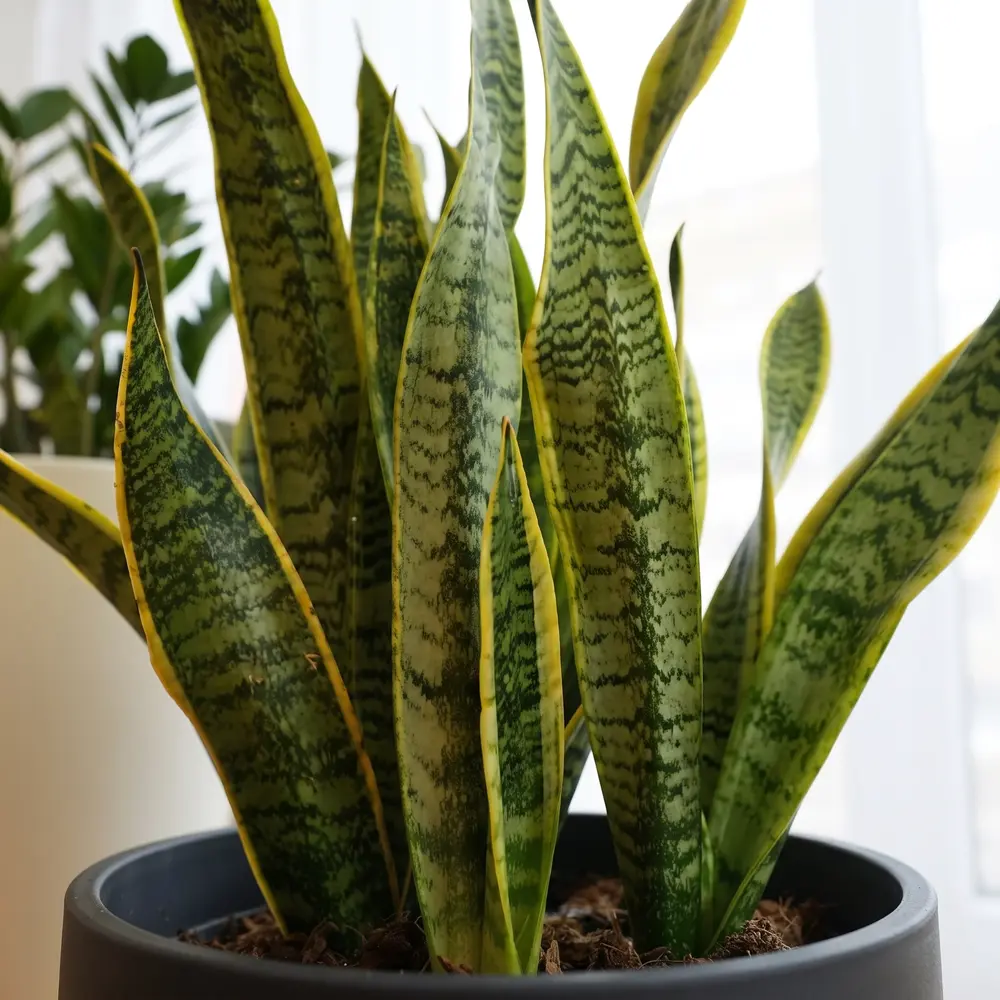
Key Takeaways
- Snake plants die from too much water, not too little. Let soil dry all the way before watering again especially in low light.
- For a plant that grows faster and keeps stronger color, give it brighter light and a gritty, fast-draining mix in a pot with drainage.
- Division is the best propagation method for keeping variegated varieties true-to-type; leaf cuttings often revert to green.
In This Article
Snake Plant Basics (Quick Profile)
- Common names : snake plant, mother-in-law’s tongue
- Botanical name : Dracaena trifasciata (formerly Sansevieria)
- Plant type : evergreen perennial, typically grown as a houseplant
- Mature indoor size : commonly 1–4 ft (some varieties taller)
- Native range : West Africa
- Toxicity : toxic to cats and dogs if chewed (GI upset is common)
Snake plants use a water-saving photosynthesis strategy (CAM), which is part of why they tolerate drought so well and why constantly damp soil is so dangerous for them.
Light : How Much It Really Needs
Snake plants are famous for “low light tolerance” but there’s a difference between tolerating low light and thriving in it.
Best light for strong growth
- Bright, indirect light (near a sunny window), plus optional gentle direct sun
- A few hours of morning sun can be excellent once acclimated
What happens in low light
- Growth slows dramatically
- Leaves may stretch or become thinner
- Variegation can fade and colors may dull
Placement tips
- Near an east window : usually ideal for steady growth
- South/west windows : great if the plant is eased into stronger light (to prevent scorch)
- If it’s 6–10 feet from a window, it’s usually “low light” for plants—even if the room looks bright to you.
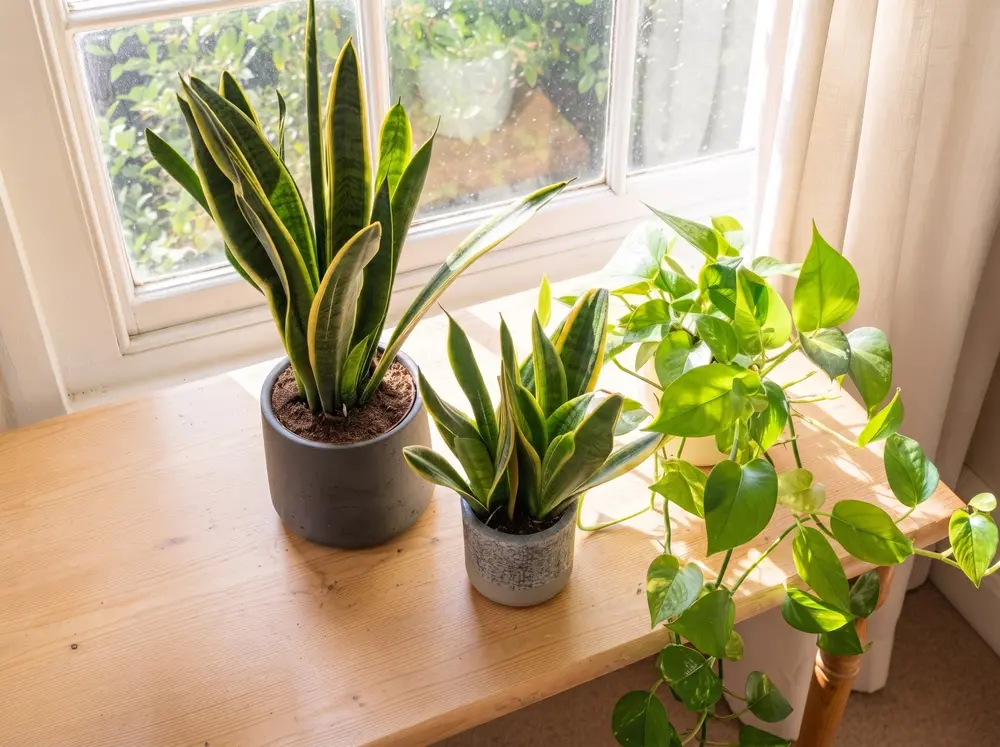
If you want a snake plant that lasts for years, prioritize airflow around roots.
Best pot type
- Drainage holes are non-negotiable
- Terracotta can help if you tend to overwater (it dries faster)
- Choose a pot that fits the root mass avoid “upsizing” too much
Best soil (simple formula)
Use a cactus/succulent mix and improve it for extra drainage :
- 2 parts cactus mix
- 1 part perlite/pumice
- Optional : 1 part orchid bark (helps keep mix airy)
Avoid heavy mixes with lots of peat that stay wet and compact over time.
Watering : The Only Schedule That Works
Forget calendar watering. Water based on dryness at depth.
The rule
Water only when the potting mix is dry all the way through (not just the top inch).
How to check quickly
- Insert a wooden skewer/chopstick to the bottom of the pot. If it comes out dark/damp, wait.
- Or lift the pot: when it feels noticeably lighter than right after watering, it’s closer to ready.
How to water correctly
- Water thoroughly until excess drains out
- Let it drain completely
- Never leave the pot sitting in water inside a cachepot or tray
Seasonal reality
- In bright summer conditions: often every 2–4 weeks
- In winter or low light: often every 4–8+ weeks
Your home’s light and temperature matter more than the season on the calendar.
Early warning sign of overwatering : yellowing at the base + softening leaf bases.
Temperature, Humidity, & Placement
- Ideal temperature : roughly normal indoor range (warm is fine)
- Keep away from cold drafts and cold window glass in winter nights
- Average indoor humidity is usually fine
Placement warning: a dim corner + frequent watering is the classic root-rot setup. Lower light means lower water use.
Fertilizing for Faster Growth (Without Burning Roots)
Snake plants are light feeders. Too much fertilizer causes weak growth and salty soil.
Best approach
- Feed only during active growth (often spring/summer)
- Use a balanced fertilizer at half strength
- Frequency : about 1–2 times per growing season is enough for many homes
Skip fertilizer when
- The plant is stressed (overwatering, pests, root issues)
- The plant is in low light or winter slowdown
- You just repotted into fresh mix (wait 3–4 weeks)
Best Snake Plant Varieties (By Look and Size)
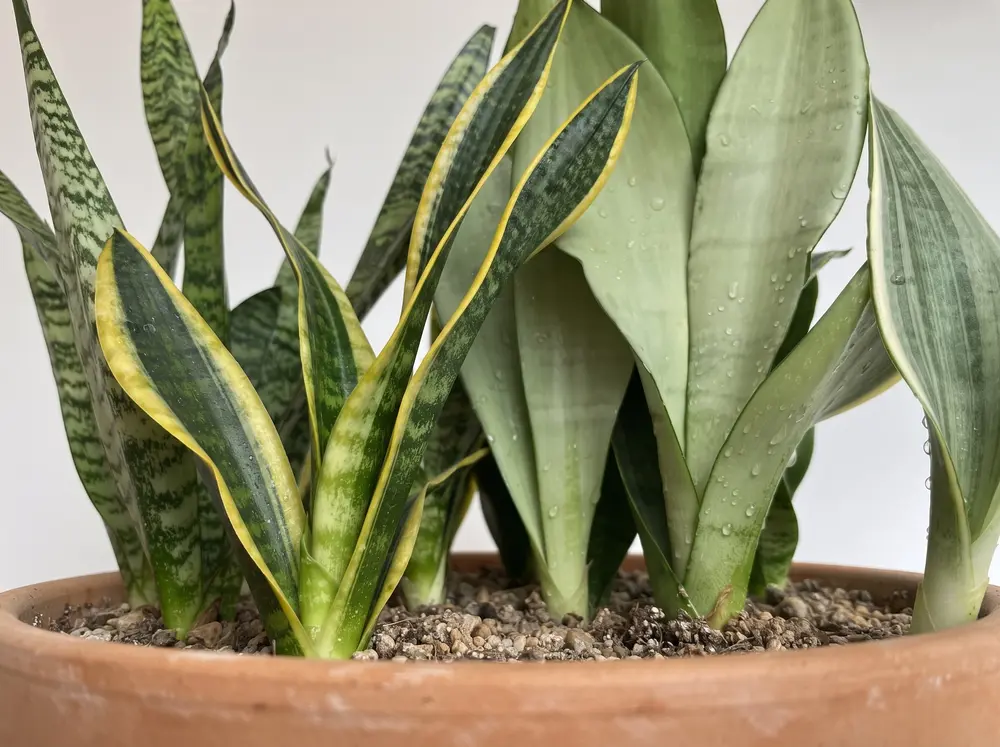
- ‘Laurentii’: classic tall leaves with yellow margins
- ‘Moonshine’: pale silvery-green, modern look (needs brighter light to stay luminous)
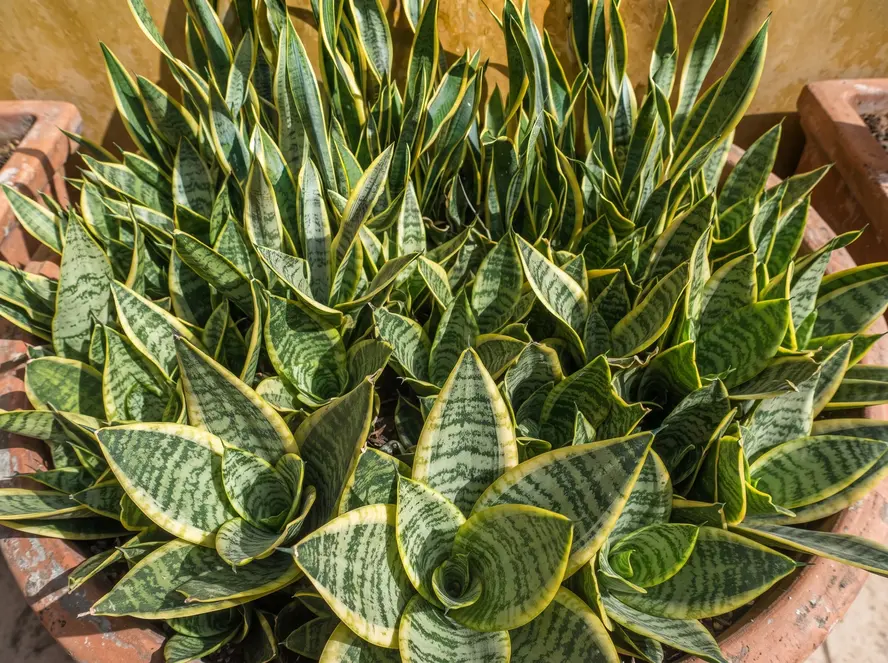
- ‘Hahnii’ (Bird’s Nest): compact rosette, great for shelves
- Cylindrical types (Dracaena angolensis): round, spear-like leaves; very drought-tolerant
- ‘Bantel’s Sensation’: narrower leaves with light striping; elegant vertical look
If you want faster “statement plant” impact, buy a larger plant snake plants grow steadily but not quickly in low light.
Propagation : Division vs Leaf Cuttings (Important Variegation Note)
1) Propagation by division (best method)
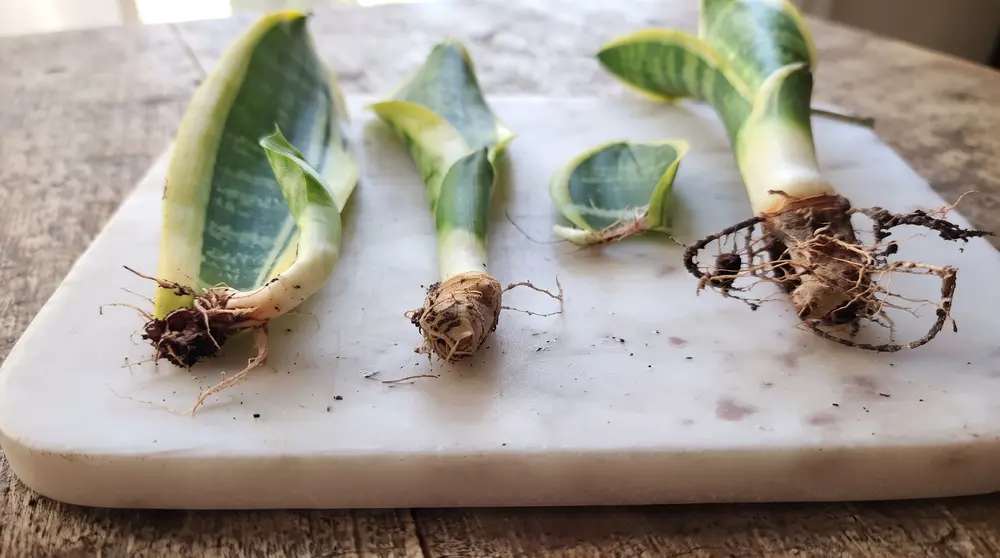
Best for : keeping variegation and getting a mature-looking plant quickly.
Steps :
- Unpot the plant and gently remove loose soil.
- Locate natural sections (rhizomes with roots and leaves).
- Cut rhizomes with a clean blade so each section has roots.
- Pot each division into a snug pot with fast-draining mix.
- Water lightly once, then wait until dry before watering again.
2) Propagation by leaf cuttings (works, but may change appearance)
Best for : making more plants from a single leaf especially non-variegated types.
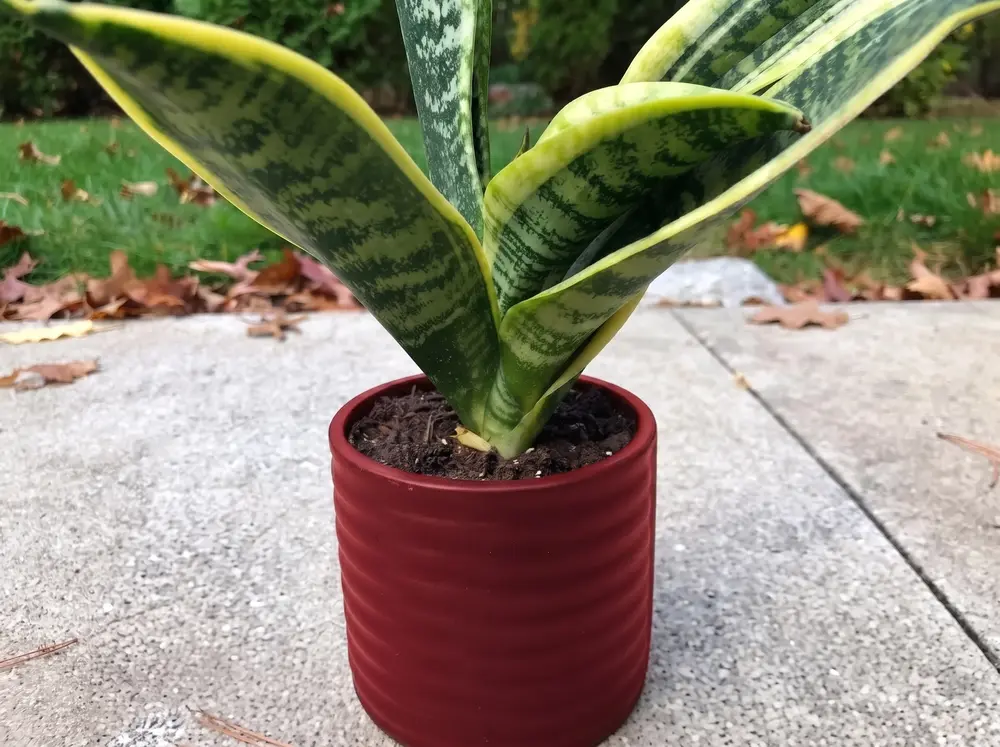
Key detail : many variegated snake plants (yellow-edged forms) often revert to green when grown from leaf cuttings. If you want identical variegation, use division, not leaf pieces.
Leaf cutting method (soil) :
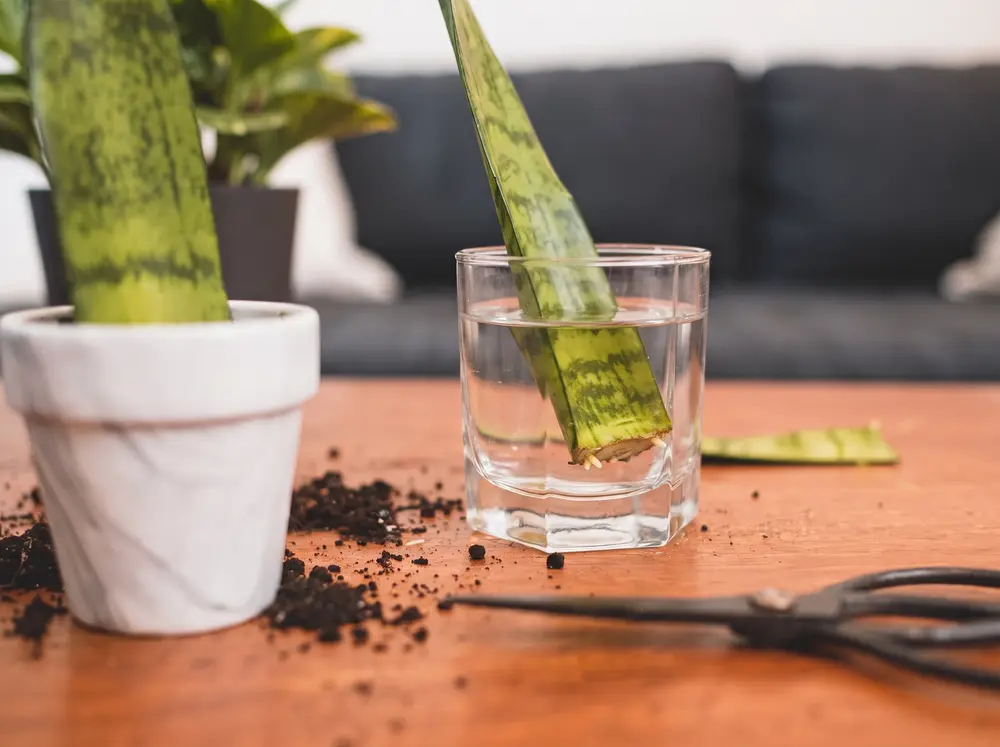
- Cut a healthy leaf near the base.
- Let the cut end callus 24–48 hours.
- Plant cut-end down in a gritty mix.
- Keep barely moist at first; roots and pups can take weeks to months.
Pruning, Cleaning, and Shaping
Snake plants don’t need “pruning” like shrubs, but you can tidy and shape them.
When to cut
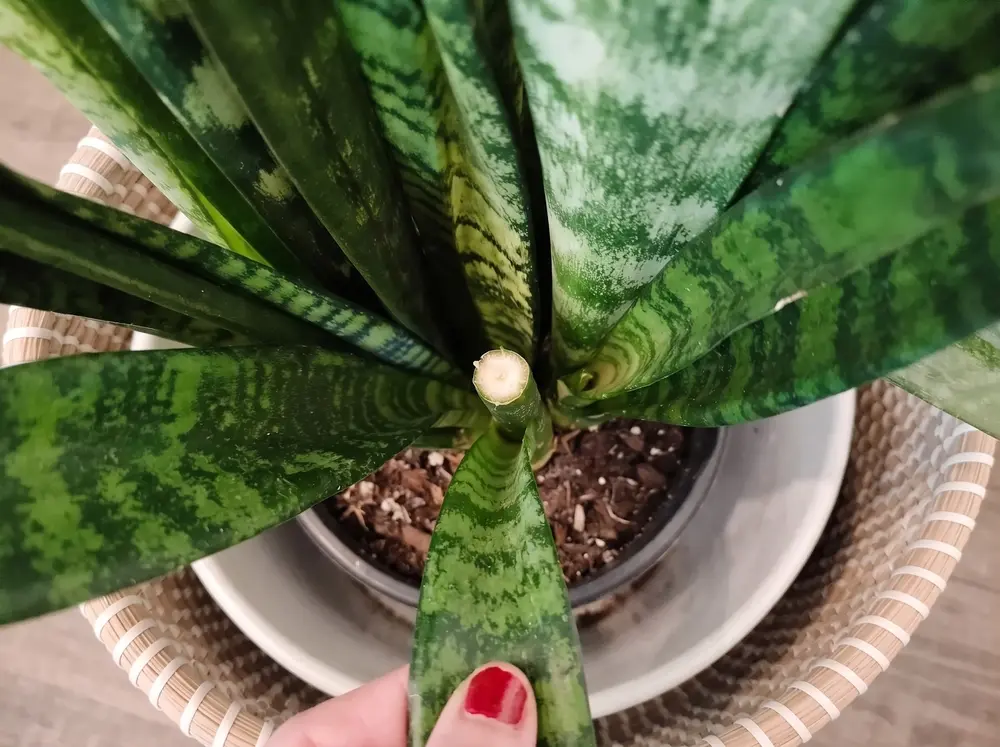
- Remove damaged, bent, or mushy leaves at the soil line with clean scissors.
- To reduce height: remove the tallest leaves entirely (cutting the top off a leaf leaves a blunt scar).
Keep leaves healthy
- Wipe dust off leaves so the plant can use light efficiently
- Rotate the pot occasionally to keep growth upright
Repotting : When to Do It and How Big to Go
When to repot
- Roots or rhizomes are crowding the pot
- The pot is cracking/bulging
- Water runs straight through immediately (rootbound)
- Mix has broken down and stays wet too long
How much bigger ?
Go 1–2 inches wider than the current pot. Oversizing is a common reason snake plants rot after repotting.
Best time
Spring through summer is easiest on the plant, but emergency repotting is fine if rot is suspected.
Blooming : How to Encourage Flowers Indoors
Snake plants can bloom indoors, but it’s not guaranteed.
What helps :
- A mature plant
- Bright light
- Slightly snug/rootbound conditions
- Consistent care (not heavy fertilizer)
Blooms are typically pale, tubular, and often fragrant, commonly opening in the evening.
Pests & Common Problems (Fast Diagnosis + Fixes)
1) Yellowing leaves + soft base
Cause : overwatering / early root rot
Fix : stop watering, increase light, and if softness spreads, unpot and remove rotted roots; repot into dry, airy mix.
2) Leaves flopping or leaning
Causes : low light, overwatering, or a too-heavy top with weak roots
Fix : brighter light, less frequent watering, and a stable pot; remove severely weakened leaves.
3) Wrinkled, puckered leaves
Cause : prolonged dryness (true thirst) or root damage
Fix : check soil if bone dry, water deeply. If soil is damp but leaves wrinkle, inspect roots.
4) Brown tips
Common causes : salt buildup from fertilizer/hard water, inconsistent watering
Fix : flush the pot occasionally; reduce fertilizer strength; water more evenly.
Common pests
- Mealybugs/scale : look for cottony clusters or bumps; wipe off and treat repeatedly
- Spider mites : more likely in hot, dry air; look for stippling and webbing
- Fungus gnats : usually a sign soil is staying wet too long adjust watering and mix
Benefits & Myths
Benefits
- Extremely drought-tolerant
- Handles a wide range of indoor conditions
- Strong architectural shape for interiors
- Long-lived and easy to propagate
Myth check (air purification)
Snake plants do exchange gases and can release oxygen at night, but meaningful “air cleaning” in a real room generally requires far more plant mass than most homes keep. Grow it because it’s tough and beautiful—not because it replaces ventilation.
FAQs
How often should I water a snake plant ?
When the soil is fully dry. That could be every 2–4 weeks in bright, warm conditions or 4–8+ weeks in low light or winter.
Can snake plants handle low light ?
Yes, but expect slower growth. For stronger color and faster growth, move it closer to a bright window.
What’s the fastest way to multiply a snake plant ?
Division of pups/rhizomes. It’s faster and keeps variegation more reliably than leaf cuttings.
Why are my snake plant leaves turning yellow ?
Most often : overwatering or poor drainage. Check soil moisture and root health before doing anything else.