How to Water Indoor Plants the Right Way (A Simple System That Prevents Overwatering)
By David Sullivan | Published on June 18, 2026
Key Takeaways
- The best indoor watering method is: check moisture at root depth → water thoroughly → let excess drain → don’t water again until the plant’s trigger is met.
- Most houseplants die from staying wet too long, especially in low light or oversized pots not from a single “too much water” moment.
- Your pot, soil mix, and light level determine drying speed. Learn the drying cycle and watering becomes easy.
In This Article
Why Indoor Watering Is Tricky (and Why Schedules Fail)
Indoors, plants dry unevenly. The top inch can look dry while the root zone is still wet especially in :
- low light rooms
- cool seasons
- plastic or glazed pots
- dense peat-heavy potting mixes
- oversized pots
That’s why calendar watering is risky. Two identical plants can need totally different watering just because one is closer to a window or in a different pot material.
The 3-Check System : How to Know When to Water (Every Time)
Use these checks in order. It takes under a minute.
Check #1 : Identify the plant’s watering style
Most houseplants fall into one of these :
- Dry-down lovers (want soil to dry significantly) : snake plant, ZZ, succulents, many cacti
- Even-moisture plants (prefer lightly moist, not soggy) : many aroids, peace lily, pothos, philodendron
- Moisture-sensitive plants (react fast to dry air/soil swings) : calathea/prayer plants, ferns, some begonias
If you don’t know the plant, assume it prefers a moderate dry-down and adjust based on how it responds.
Check #2 : Test moisture where roots are (not just the surface)
Pick one method :
- Finger test (small pots) : push 2 inches down, not just the surface.
- Skewer/chopstick test (best for most pots) : insert to near the bottom, wait 10 seconds, pull out. Dark/damp = wait.
- Pot-weight test : lift after watering (heavy) and again when dry (light). This becomes incredibly accurate with practice.
Check #3 : Confirm the pot can drain
Before watering, confirm :
- there’s a drainage hole (or the plant is in a nursery pot inside a cover pot), and
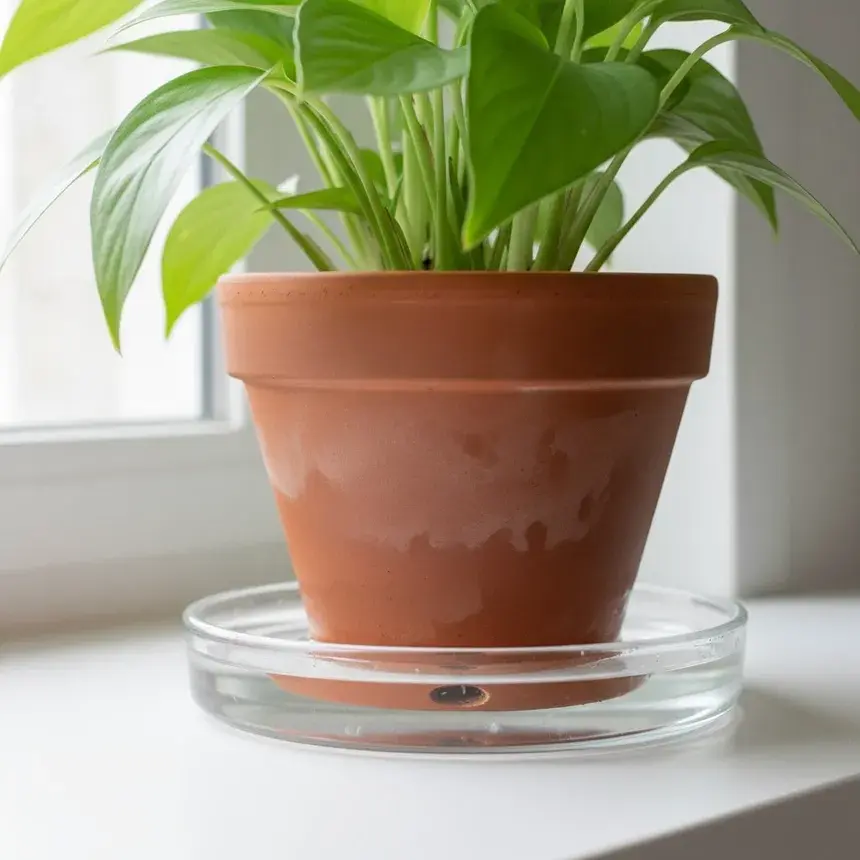
- you will empty any saucer/cachepot after watering.
If a pot can’t drain, your plant’s roots are living on hard mode.
How Much Water to Use (So Roots Actually Benefit)
When it’s time to water, water thoroughly not a tiny sip.
The goal
Moisten the entire root ball so roots can drink evenly and salts don’t concentrate.
A reliable method
- Water until you see runoff from the drainage holes (often about 10–20% runoff).
- Let it drain completely.
- Empty the saucer/cachepot after ~10 minutes.
Exception : plants in very large containers may need slower watering in stages so the mix absorbs evenly (water, wait 5 minutes, water again).
Top Watering vs Bottom Watering vs Self-Watering (Which Is Best?)
Top watering (default choice)
Best for : most houseplants.
Pros : flushes salts, re-wets evenly when done thoroughly.
Watch-out : don’t splash crowns of sensitive plants; don’t leave runoff sitting.
Bottom watering (useful tool, not magic)
You place the pot in a shallow tray of water and let it wick up.
Best for : African violets, plants that dislike wet leaves, small pots that dry fast, or when the mix is hard to re-wet from the top.
How long : typically 15–30 minutes, then drain.
Watch-out : bottom watering doesn’t flush salts well so occasionally top-water to rinse the mix.
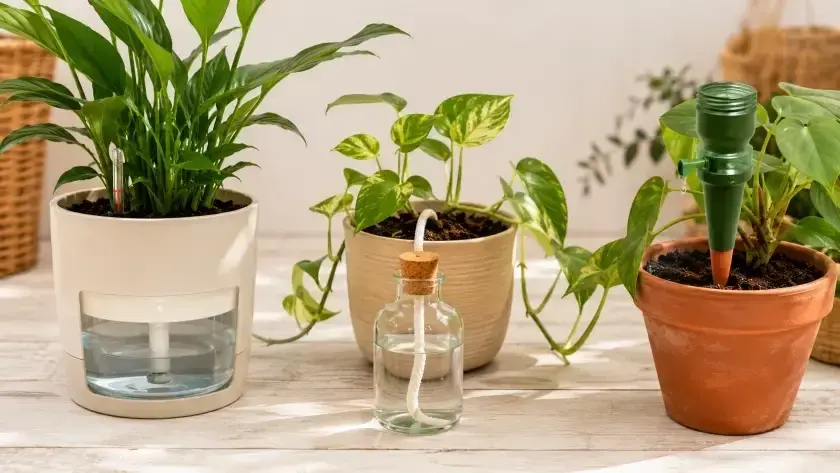
Self-watering planters (great when used correctly)
Best for : people who travel, or plants that like steady moisture.
Watch-out : they can keep soil constantly damp, which is risky for drought-tolerant plants (snake plant, ZZ, succulents). If you use one, choose plants that actually enjoy consistent moisture and use a well-aerated mix.
Water Quality : Tap vs Filtered vs Rainwater (When It Matters)
Most houseplants do fine with normal tap water. Problems usually show up when water is :
- softened (often adds sodium salts—bad for soil over time)
- very hard/mineral-heavy (can leave crust and raise soil pH gradually)
Best practical options
- Room-temperature tap water (let it sit if you prefer, but many plants tolerate chloramine just fine)
- Filtered water for sensitive plants (calatheas, some dracaenas)
- Rainwater when available (often excellent)
One high-value habit : occasional flushing
Every 1–3 months (more often if you fertilize frequently), run extra water through the pot to flush salts especially for plants showing brown tips and white crust on soil.
Watering Guides by Plant Type (Simple “Triggers”)
Use these as your “when to water” triggers, then refine based on your home.
1) Succulents, cactus, snake plant, ZZ
Trigger : water only when soil is fully dry (or nearly so).
Common failure : watering “a little” too often → rot.
Pro tip : brighter light = faster drying; low light = water very rarely.
2) Pothos, philodendron, monstera, many common aroids
Trigger : water when the top 2 inches are dry, and the skewer shows only slight moisture deeper down.
Common failure : letting it go bone-dry repeatedly (leaf curl, limp vines), then overcorrecting.
3) Peace lily
Trigger : keep evenly moist but not soggy; water when the top inch is dry.
Clue : peace lily droops dramatically when thirsty, then rebounds after watering.
4) Ferns and calathea/prayer plants
Trigger : don’t let the root zone dry completely; aim for lightly moist, airy mix.
Common failure : dry indoor air + inconsistent watering → crisping edges and stress.
Pro tip : humidity helps, but drainage still matters—wet soil without oxygen causes rot even for “moisture lovers.”
5) Orchids (phalaenopsis)
Trigger : water when roots look silvery and the medium is nearly dry.
Common failure : treating orchid bark like potting soil (too frequent watering).
Seasonal Adjustments (The Winter Slowdown Rule)
Many houseplants slow growth in fall/winter because light drops. When growth slows, water use slows too.
Practical rule : if your plant isn’t pushing new growth and the pot stays wet longer, extend the time between waterings.
Don’t “keep the schedule” just because it’s what you did in summer.
Overwatering vs Underwatering : Fast Diagnosis + Fix
Signs of overwatering / staying wet too long
- yellow leaves + soft stems
- musty smell from soil
- fungus gnats hovering
- drooping while soil is wet
Fix : let soil dry longer, improve light/airflow, verify drainage, consider a chunkier mix or smaller pot if needed.
Signs of underwatering
- pot feels very light
- leaves wilt and feel thin/papery
- soil shrinks from pot edges or water runs straight through
Fix : rehydrate thoroughly (bottom soak 20–30 minutes), then return to a consistent trigger-based routine.
FAQs
Is misting the same as watering ?
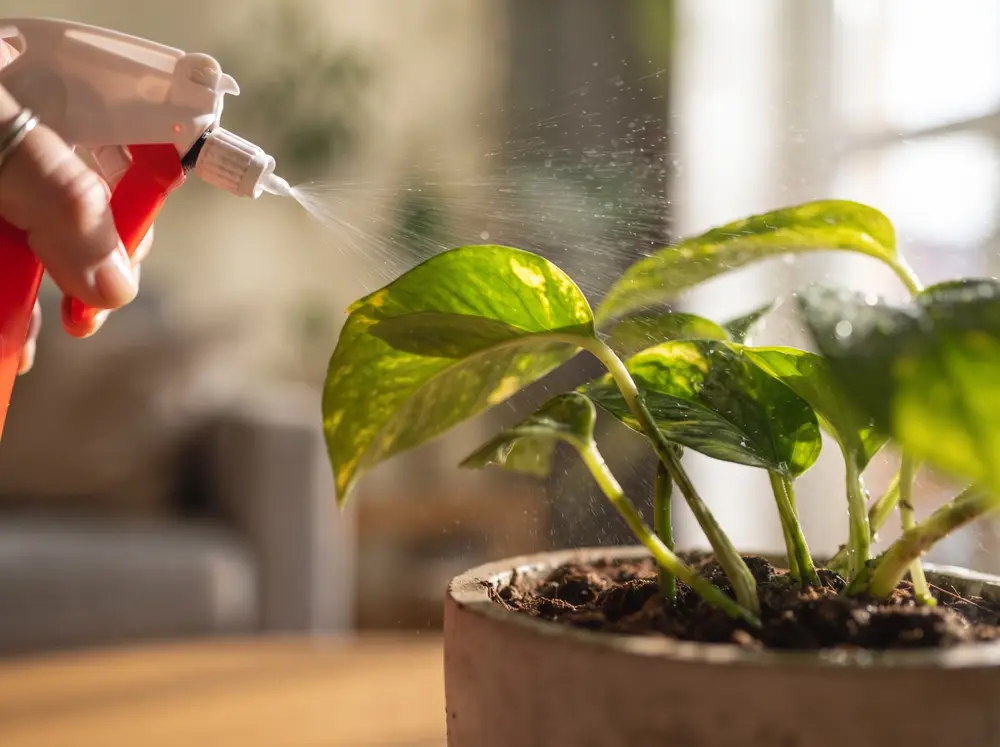
No. Misting can slightly boost humidity short-term, but it doesn’t hydrate roots. Use it only as a supplement for humidity-loving plants.
Is watering with ice cubes a good idea ?
It’s unreliable. It can under-water large pots and may chill roots of tropical plants. Better: room-temperature water applied thoroughly.
What’s the #1 rule for indoor watering success ?
Never water twice in a row without checking moisture at depth. Most indoor plant problems start with “wet soil that stays wet”