How to Get Rid of Fungus Gnats in Houseplants (Naturally & Fast)
By David Sullivan | Published on August 01, 2026
Key Takeaways
- Fungus gnats aren’t usually a “dirty house” problem they’re a “soil staying wet too long” problem. Fixing moisture is the real cure.
- The only reliable way to get rid of fungus gnats naturally is to attack both stages: trap/kill the flying adults and eliminate larvae in the soil.
- Most infestations fade quickly once you change watering habits, but you must keep treatment going for 2–3 weeks to outrun their life cycle.
In This Article
What Fungus Gnats Are (and why they show up)
Fungus gnats are tiny, mosquito-like flies that hover around houseplants and lay eggs in damp potting mix. The adults are mostly a nuisance. The larvae little translucent worms with darker heads live in the soil and feed on fungi and decaying organic matter. In heavier infestations, larvae can also chew tender roots, which is why seedlings and delicate plants can suddenly stall, droop, or decline.
They show up for one main reason : consistently moist soil plus organic material. That can happen from :
- watering too often (especially in low light)
- pots without drainage holes, or pots sitting in runoff water
- dense potting mix that stays wet in the center
- oversized pots (extra wet soil the roots can’t use)
- bringing home a plant already carrying eggs/larvae
How to Confirm You Have Fungus Gnats
Before treating, make sure you’re not dealing with fruit flies or drain flies.
You likely have fungus gnats if :
- small flies linger close to potting soil and appear when you water or disturb the surface
- you see them mostly around plants (not around fruit, trash, or sinks)
- yellow sticky traps placed near the soil catch them within a day or two
- you spot larvae in the top layer of soil (more common in heavy infestations)
A quick confirmation trick :
- Press a slice of raw potato (cut side down) on the soil surface overnight. In the morning, lift it larvae often gather underneath. It’s not the best “cure” but it’s a useful diagnostic.
The Natural Fix That Works Fastest : Break the Life Cycle
If you only kill adults, new adults hatch from soil and the problem returns. If you only treat soil, adults keep laying eggs. You need both.
A winning strategy always has three parts :
- Dry the breeding zone (adjust watering + improve drainage)
- Catch adults (sticky traps, vacuuming)
- Treat larvae in the soil (BTI, beneficial nematodes, or careful peroxide use)
Do those together and you typically see a major drop in 7–14 days.
Natural Treatments : Adults vs Larvae (what to use and when)
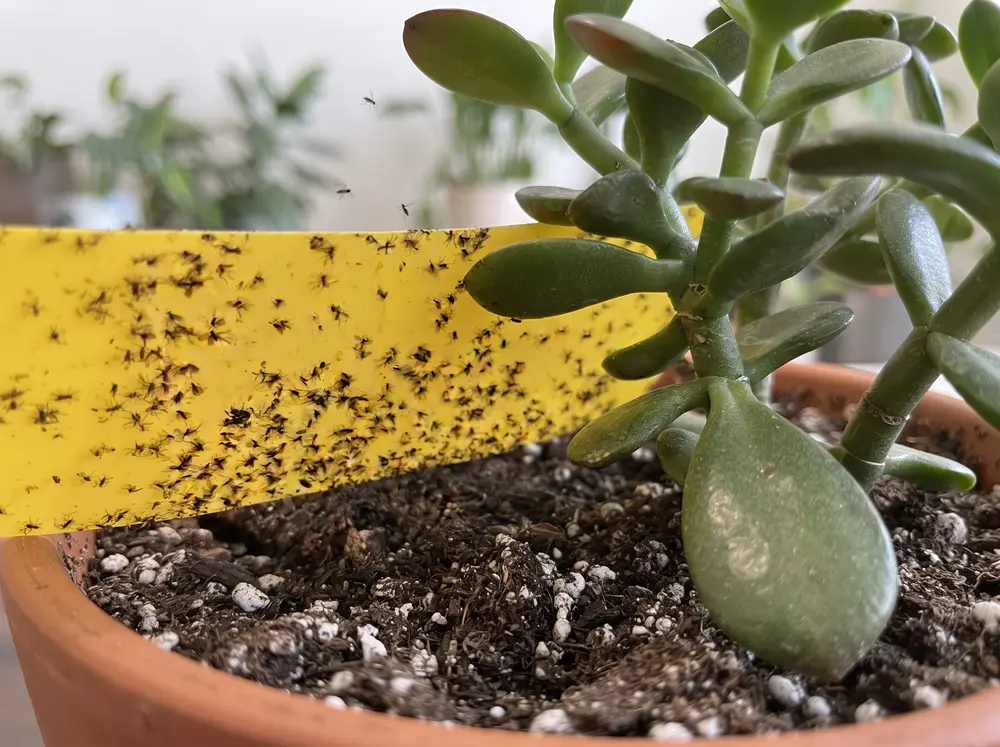
1) Yellow sticky traps (best first step for adults)
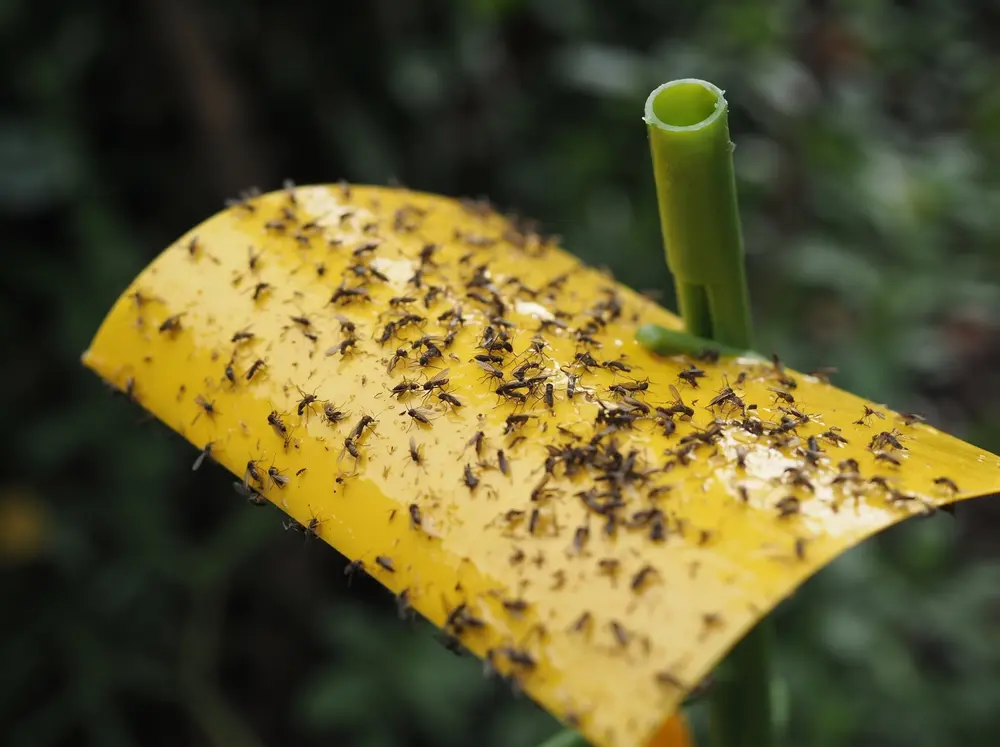
Sticky traps won’t fix the soil, but they immediately reduce the number of egg-laying adults and show you whether you’re improving.
How to use them well :
- place traps right at soil level (where adults hover)
- replace when covered or dusty
- keep them up for at least 2 weeks, even after you think the problem is gone
Extra “fast” tip :
- Vacuum gnats off windows and around plants daily for a week. It sounds basic, but it works surprisingly well alongside sticky traps.
2) Let the soil dry more between waterings (the real cure)
This is the most important “natural” solution.
What to do :
- stop watering on a schedule
- water only when the plant’s soil has dried to the correct level at depth
- empty saucers and cachepots after watering
- if your plant can tolerate it, let the top 1–2 inches dry fully (fungus gnat eggs and larvae struggle when the surface stays dry)
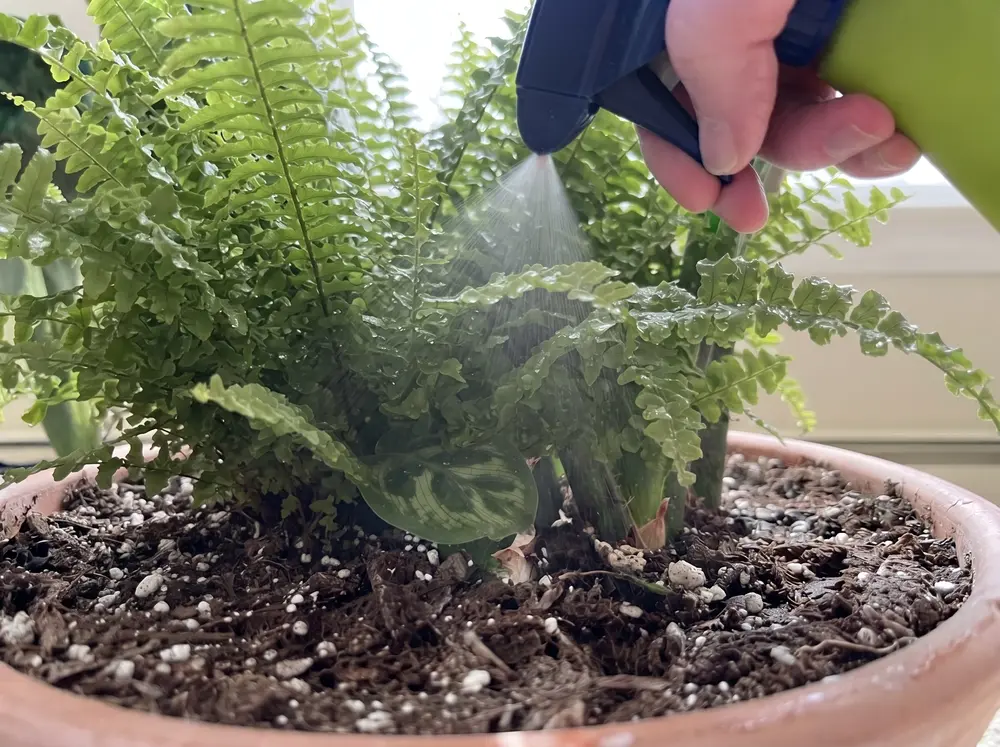
If your plant is a moisture-lover (like many ferns), don’t intentionally dehydrate it. Instead, use the larva controls below and improve airflow/drainage so it’s “moist but not swampy”
3) BTI (mosquito dunks/bits) (one of the best natural larva controls)
BTI (Bacillus thuringiensis israelensis) is widely used to control mosquito larvae and also works well on fungus gnat larvae.
How to use it :
- soak mosquito dunks/bits in water and use that water for your plants, or follow the product instructions for indoor pots
- repeat applications because new eggs hatch quickly
Why it’s high-value :
- it targets larvae effectively without needing harsh chemicals
- it works well even if you can’t let the soil dry much (humidity plants, self-watering setups)
4) Beneficial nematodes (strong option for stubborn infestations)
If the infestation keeps coming back, beneficial nematodes (often Steinernema feltiae) are a natural biological control that hunt larvae in the soil.
They work best when :
- soil is lightly moist (not dry-dusty)
- you follow storage and application instructions carefully (they’re living organisms)
This is a very effective “serious but still natural” option
5) Hydrogen peroxide soil drench (use carefully)
A diluted 3% hydrogen peroxide solution can kill larvae on contact and adds oxygen temporarily, but it’s not something to overuse.
A commonly used dilution :
- 1 part 3% hydrogen peroxide to 4 parts water
How to apply :
- use it as a normal watering when the plant is due for water
- don’t repeat endlessly; reassess moisture, pot size, and mix if gnats persist
Important caution :
- repeated peroxide drenches can stress roots and disrupt helpful soil microbes. Use it as a tool, not your long-term plan.
6) Top-dressing to keep the surface dry (supporting tactic)
If you can keep the top layer dry, you reduce egg-laying and larval survival.
Two practical options :
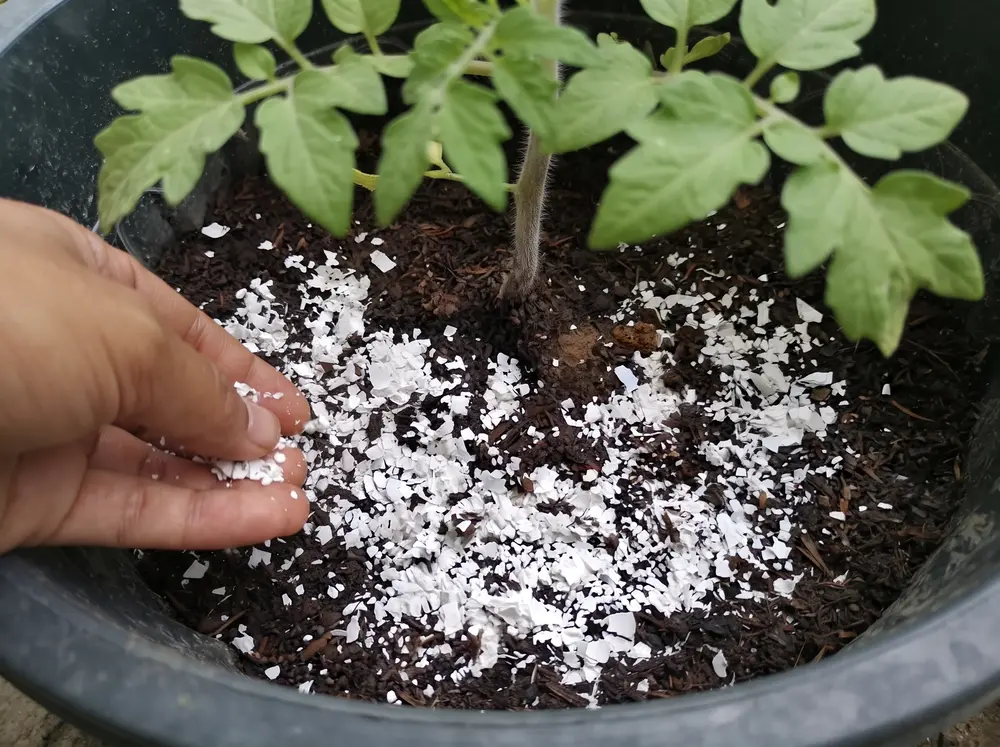
- a thin layer of coarse sand or fine gravel (helps the surface dry faster)
- diatomaceous earth (DE) can work only when dry; it becomes ineffective when wet and can be irritating if inhaled
Top-dressing helps most when paired with better watering habits and larva control.
7) “Home remedies” like vinegar, cinnamon, or chamomile (limited value)
- Vinegar traps may catch a few adults, but fungus gnats are usually more attracted to soil than vinegar.
- Cinnamon/chamomile may slightly reduce surface fungus, but they won’t solve the root cause if soil stays wet.
If you use them, treat them as minor helpers not the main fix.
A Simple 14-Day Fungus Gnat Elimination Plan
Day 1
- Isolate infested plants if possible (especially if you have many plants).
- Add yellow sticky traps to every affected pot.
- Empty any standing water (saucers/cachepots).
- Remove dead leaves from the soil surface.
Days 2–3
- Allow pots to dry as much as the plant safely tolerates.
- If you’re using BTI: start watering with BTI-treated water.
Days 4–7
- Continue sticky traps and BTI or your chosen larva control.
- Vacuum adults from nearby windows and surfaces if needed.
- Check soil moisture properly before watering again.
Days 8–14
- Replace sticky traps if full.
- Reapply BTI per label (or repeat your chosen larva control).
- Keep adjusting watering so the soil isn’t staying constantly damp.
Most people fail here by stopping too soon. You want to keep pressure on the life cycle until the population collapses.
When You Should Repot (and how to do it safely)
Repotting isn’t always necessary, but it can be the fastest reset when :
- the potting mix is old, compacted, and stays wet too long
- you accidentally overpotted and the plant never dries properly
- you suspect root rot (sour smell, mushy stems, persistent yellowing)
- the infestation is severe and ongoing despite treatments
Repot “cleanly” :
- discard the old soil (don’t reuse it indoors)
- wash the pot with soap and water
- repot into a fresh, well-draining mix appropriate to the plant
- use a pot size that matches the root ball (oversized pots invite recurrence)
Prevention Tips (so they don’t come back)
- Quarantine new plants for 2–3 weeks and use a sticky trap as an early warning.
- Water by soil dryness at depth, not by calendar.
- Avoid letting plants sit in runoff water.
- Don’t use oversized pots “to give room.” Bigger pot = slower drying = more gnat risk.
- Store unused potting soil sealed shut (gnats can breed in open bags in humid areas).
- Keep the soil surface tidy remove dead leaves and dropped petals.
FAQ
Do fungus gnats harm houseplants ?
Adults are mostly annoying. Larvae can damage fine roots, especially in seedlings and stressed plants, which can cause slow growth, drooping, or yellowing.
Why do I keep getting fungus gnats even though I changed the water schedule ?
Often it’s one of these : pot too large, soil too dense, low light slowing drying, or water trapped in a cachepot/saucer. Fix the drying environment, not just the “days between watering”
Are fungus gnats coming from my drains ?
Fungus gnats usually stay near soil. Drain flies are different. If insects are mainly around sinks and drains, you may have a drain fly issue rather than fungus gnats.
What’s the most effective natural treatment ?
A combination of sticky traps (adults) plus BTI or beneficial nematodes (larvae), alongside improved watering and drainage.