How to Grow and Care for Bunny Ear Cactus
By David Sullivan | Published on June 24, 2026
Key Takeaways
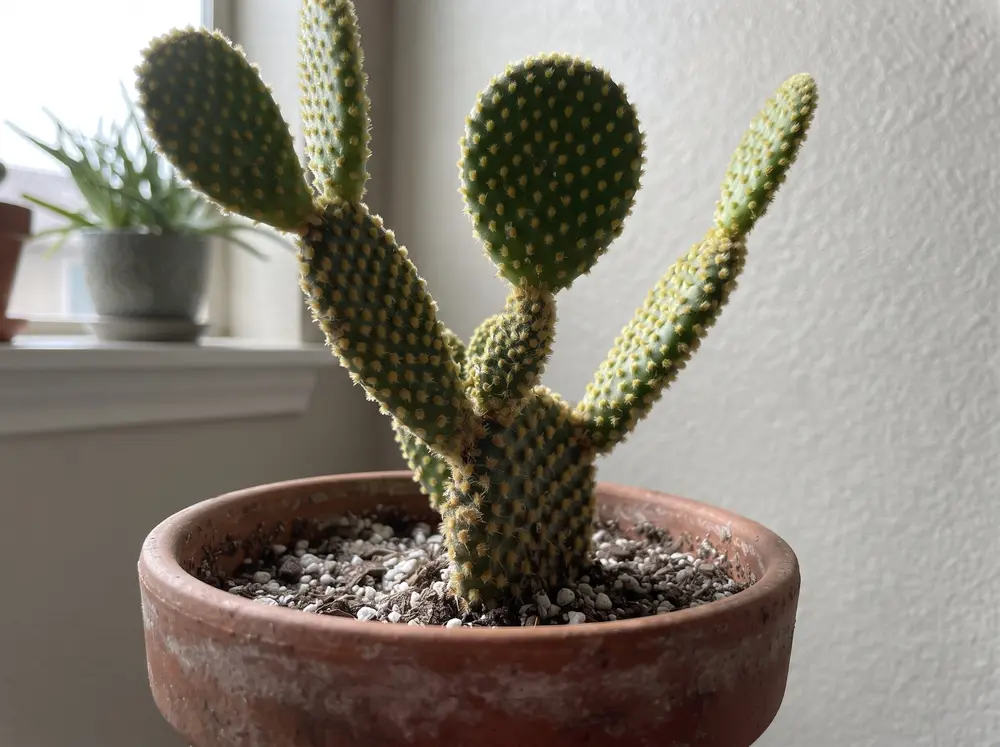
- Bunny ear cactus (Opuntia microdasys) needs strong light, gritty soil, and long dry periods overwatering is the fastest way to lose it.
- The “polka dots” are glochids (tiny detachable spines). Handle with tongs + thick gloves, and keep it away from kids/pets.
- Propagation is simple : let pads callus, then root them in a dry, fast-draining mix with minimal watering until established.
In This Article
Bunny Ear Cactus Basics (Quick Profile)
- Common names : bunny ear cactus, angel’s wings cactus, polka dot cactus
- Botanical name : Opuntia microdasys
- Plant type : cactus
- Mature size (indoors) : typically 2–3 ft tall; can spread wider with age
- Light : bright light to full sun
- Soil : sandy/gritty, very fast draining
- Blooming : may bloom outdoors; rare indoors
- Special warning : glochids embed easily in skin avoid bare-handed contact
Care
Bunny ear cactus is “easy” only if you give it what it evolved for : sun, airflow, and dry roots. Most problems happen when it’s treated like a tropical houseplant.
Light
This cactus performs best with direct sun.
- Indoors : place in the sunniest window you have (often south- or west-facing in the Northern Hemisphere). Aim for 6–8 hours of direct sun if possible.
- If your cactus has been in low light : increase sun gradually over 7–10 days to avoid stress (even desert plants can scorch if moved abruptly).
- If it’s stretching or leaning : that’s low-light growth. Move it closer to the window or add a grow light.
What good light looks like : compact pads, strong color, and new pads forming without thin, weak growth.
Soil
Bunny ear cactus needs a mix that drains fast and doesn’t stay wet in the center of the pot.
Simple soil recipe (reliable for most homes) :
- 1 part cactus/succulent potting mix
- 1 part pumice or perlite
- Optional : a handful of coarse sand or fine gravel for extra “grit”
Avoid : heavy peat-based mixes that stay soggy, and garden soil/topsoil (compacts in containers).
Water
This plant is drought-tolerant and moisture-sensitive. The correct routine is not “a little often” it’s soak, then dry completely.
Watering rule : only water when the potting mix is fully dry all the way down.
- In bright summer conditions, that might be every 2–4 weeks.
- In winter or lower light, it can be every 4–8+ weeks.
How to water properly :
- Water thoroughly until it runs out the drainage hole.
- Let it drain completely.
- Never let the pot sit in a saucer of water.
Signs you’re watering too often : yellowing, soft pads, mushy base, or a sour smell from soil.
Temperature and Humidity
- Prefers warm, dry indoor conditions.
- Keep away from cold drafts and frosty windowsills at night.
- Average household humidity is usually fine very humid rooms increase rot risk if soil stays wet.
Fertilizer
Bunny ear cactus does not need heavy feeding.
- Feed once per year in spring (or at most once in spring and again mid-summer) using a cactus fertilizer at a reduced strength.
- Do not fertilize in winter or when the plant is stressed.
Pruning
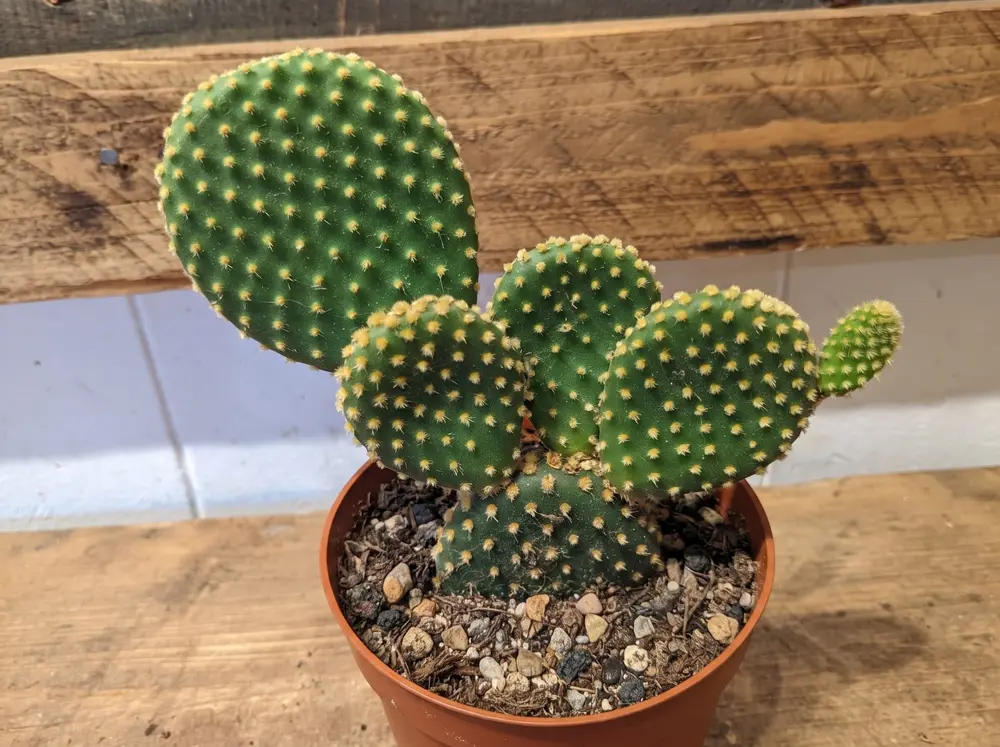
Pruning is optional, but it helps shape the plant and remove damaged pads.
When to prune
- Best time : spring to early summer (active growth)
- Remove : skinny pads, damaged pads, or pads that are crowding the plant’s shape
How to prune safely (glochid-safe method)
- Put on thick gloves and use tongs to hold the pad.
- Use a clean, sharp knife or pruners at the pad joint.
- Let the cut surface dry and callus (especially if you plan to propagate).
Shaping tip : removing the tip pad encourages branching and a fuller “bunny ear” look over time don’t remove more than about one-third of the plant at once.
Propagating
Bunny ear cactus is one of the easiest cacti to propagate if you’re patient with watering.
Best time to propagate
Spring and summer, when the plant naturally wants to grow roots.
Propagation by pad (cutting) — step-by-step
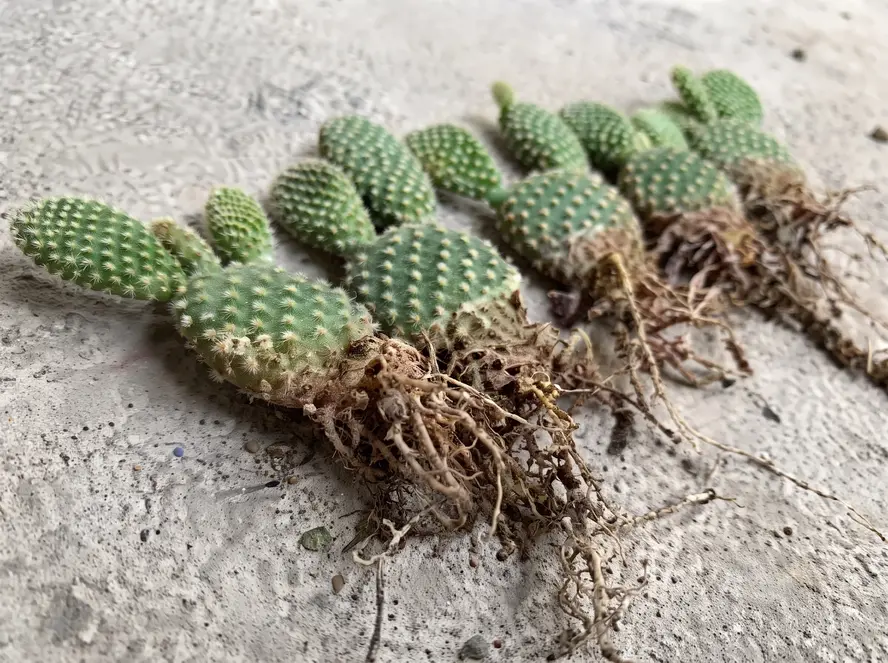
- Remove a healthy pad using gloves/tongs.
- Let it callus in a dry, shaded spot for 2–7 days (larger pads need longer). The cut end should feel dry, not tacky.
- Fill a small pot with dry, gritty cactus mix.
- Insert the pad cut-end down about 1 inch (or set large pads on the surface and stabilize with gravel).
- Place in bright light (a bit of morning sun is fine), but avoid harsh all-day sun until it roots.
- Wait to water. After 7–14 days, you can give a very light watering. Then water sparingly until you feel resistance (roots forming) or see new growth.
Common propagation mistake : watering like a normal houseplant. Unrooted pads rot easily if kept damp.
Growing in Pots
If you’re growing bunny ear cactus indoors, container choice matters as much as soil.
Best pot type
- Use a pot with drainage holes (required).
- Terracotta is helpful because it breathes and dries faster, especially for people who tend to overwater.
- Choose a pot that fits the root ball don’t oversize.
Repotting (every 2–3 years, or when crowded)
Repot when :
- the plant becomes top-heavy and unstable
- roots fill the pot
- soil breaks down and dries too slowly
How to repot without getting covered in glochids :
- Stop watering for 1–2 weeks beforehand (drier soil is easier and safer).
- Wear thick gloves and use tongs to steady the cactus.
- Slide out the root ball and gently remove loose old mix.
- Move into a pot only slightly larger, refill with fresh gritty mix.
- Wait about 5–7 days before watering (gives any root damage time to seal).
Overwintering
Bunny ear cactus doesn’t like cold and is not frost-tolerant.
Indoors (most people)
- Give it the brightest light you can.
- Water very sparingly only when fully dry, and often much less than summer.
- Don’t fertilize in winter.
Outdoors (warm climates only)
If you grow it outdoors seasonally, bring it in before cold nights. A cool, bright location is fine, but avoid freezing temperatures.
Pests and Diseases
Bunny ear cactus is generally tough, but two issues show up repeatedly : sap-sucking pests and rot from moisture.
Common pests
- Mealybugs : white cottony clusters in joints
- Scale : small bumps on pads that don’t brush off easily
Treatment :
- Isolate the plant.
- Dab pests with isopropyl alcohol on a cotton swab (repeat weekly).
- Improve airflow and avoid over-fertilizing (soft growth attracts pests).
Root rot (most common disease)
Root rot is almost always caused by soil staying wet too long.
Signs :
- soft/mushy base
- yellowing pads
- foul smell in soil
- pads dropping or collapsing
What to do :
- Unpot immediately, remove rotten roots, and repot into dry, fresh gritty mix.
- If the base is compromised, save the plant by propagating healthy pads.
FAQ
Why is my bunny ear cactus drooping ?
Most often it’s a watering issue :
- Drooping + wet soil : likely overwatering/root stress
- Drooping + bone-dry soil for a long time : underwatering
Check soil moisture deep in the pot before changing anything.
Does bunny ear cactus flower indoors ?
It can, but it’s uncommon. Flowering is more likely outdoors with strong sun, seasonal temperature shifts, and mature growth.
Is bunny ear cactus safe to touch ?
Not really. The “dots” are glochids tiny spines that detach easily. Always handle with gloves and tongs, and keep it out of areas where brushing against it is likely.
Is bunny ear cactus illegal ?
Rules vary by country/region. In some places (including parts of Australia), certain Opuntia species are restricted due to invasiveness. Always check local regulations before planting outdoors.