Houseplant Light, Made Simple : How to Find the Right Sunlight Level (Without Guessing)
By David Sullivan | Published on July 12, 2026
Key Takeaways
- Indoors, light drops dramatically with distance from the window often more than people expect so placement matters as much as window direction.
- The best way to choose houseplants is to measure or map your brightest and dimmest spots, then match plants to those zones.
- Leaf signals are reliable : stretching and small leaves usually mean too little light; bleaching and crispy patches often mean too much direct sun.
In This Article
The Indoor Light Problem Most People Don’t Realize
Outdoor “full sun” is incredibly bright. Even a sunny window is much dimmer than outside light plus the glass filters some wavelengths and the light hits from one direction instead of all around.
That’s why two homes with the “same” south-facing window can grow very different plants :
- One has a balcony overhang or trees outside (light reduced)
- One has tinted glass or screens (light reduced)
- One places plants 6 feet back from the window (light reduced)
- One has white walls bouncing light (light increased)
So instead of relying on labels alone, you’ll get the best results by thinking in zones.
The 4 Indoor Light Levels (Practical Definitions)
Forget confusing terms for a moment use these real-life categories.
1) Direct Sun (High Light)
- Sunbeams hit the plant leaves for several hours
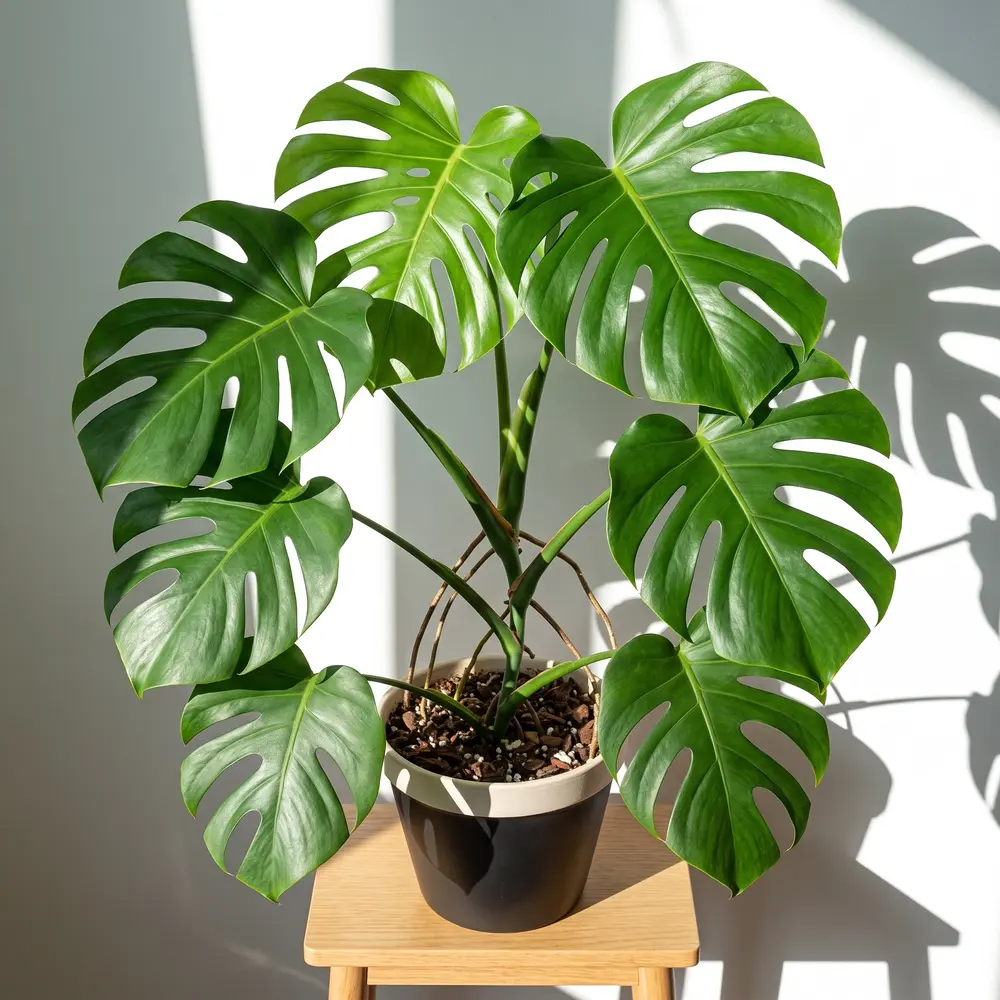
- You get sharp shadows on the floor
- Typical locations : right in bright south/west windows (N. Hemisphere)
Best for : most succulents and cacti, many herbs, some palms, citrus (with enough hours)
2) Bright Indirect Light
- The room is bright, but sunbeams don’t hit the leaves for long
- You can read comfortably all day without turning on lights
- Typical locations : near an east window, or a few feet back from a strong south/west window, or behind a sheer curtain
Best for : hoya, many aroids (monstera, philodendron), rubber plant, fiddle-leaf fig (often), orchids (many types), dracaena
3) Medium Light
- The room is lit, but it’s not “sunny”
- The plant is usually several feet from a window, or the window is shaded by buildings/trees
- Many plants survive here but grow slower
Best for : pothos, heartleaf philodendron, peace lily (often), zz plant (slow), snake plant (slow)
4) Low Light (True Low Light)
- You’d want lights on for reading most of the day
- Corners far from windows, hallways, north rooms in winter, etc.
Important : most “low-light plants” tolerate low light they don’t thrive in it. Expect slower growth and less variegation.
Best for : zz plant (slow but tough), some snake plants, cast iron plant, some pothos (slower)
How to Make a “Light Map” of Your Home in 10 Minutes
This is the most useful step you can do once and it makes plant shopping easy forever.
Step 1 : Identify your brightest windows
Note each window direction:
- South / West (N. Hemisphere) = strongest potential light
- East = gentle morning light
- North = weakest (but can still be decent if unobstructed and large)
(In the Southern Hemisphere, north-facing windows usually get the strongest sun.)
Step 2 : Mark three distances from each good window
Light usually changes more with distance than people expect. Test these three placements:
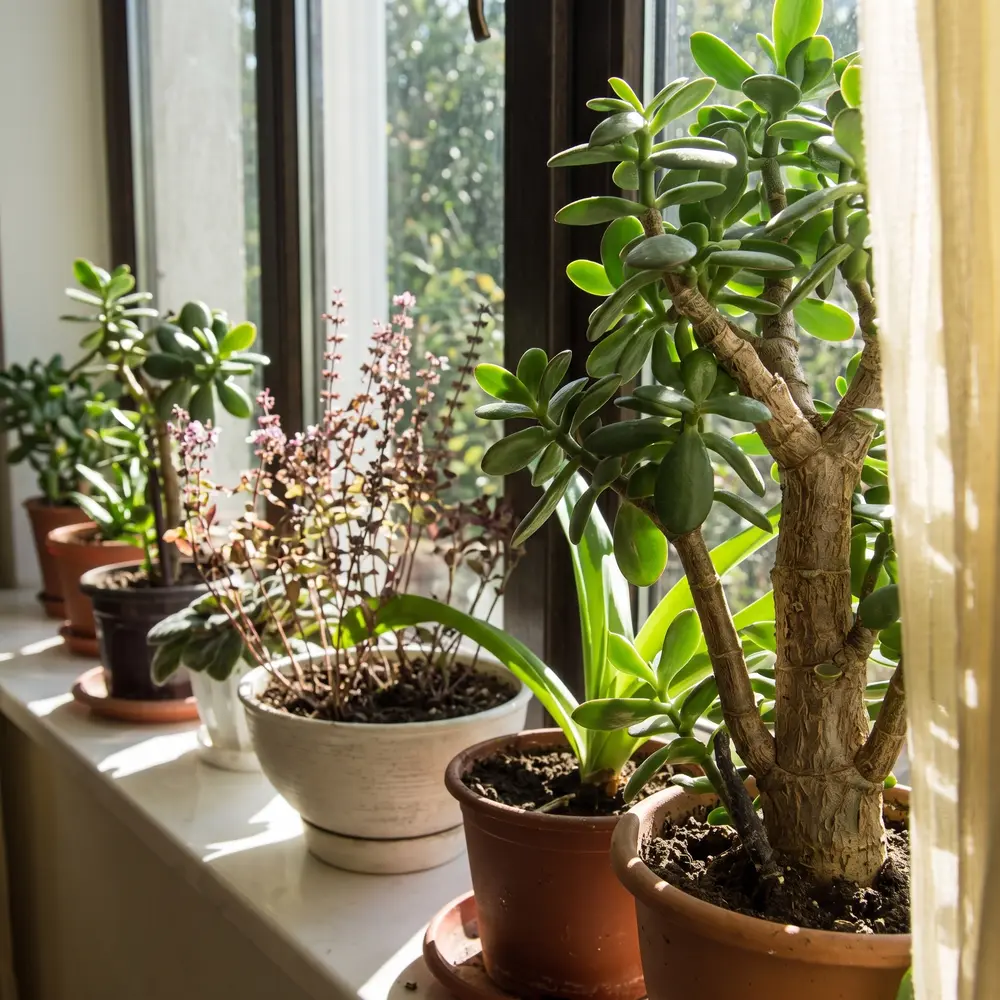
- 0–1 ft (0–30 cm): window-sill zone (brightest)
- 2–4 ft (60–120 cm): near-window zone
- 6–10 ft (180–300 cm): interior zone
Step 3 : Do the “shadow check”
On a sunny day:
- Sharp, dark shadow: strong/direct light
- Soft-edged shadow: bright indirect
- Barely visible shadow: medium to low
Step 4 (optional but powerful) : Use a lux meter app
If you want numbers, measure at plant height at a few times (morning/noon/afternoon). As a simple guide:
- Low light: ~250–1,000 lux
- Medium: ~1,000–5,000 lux
- Bright indirect: ~5,000–15,000 lux
- Direct sun at the window: often 20,000+ lux (varies hugely)
You don’t need perfect accuracy just compare spots in your home.
Window Direction + Distance : The Two Rules That Matter Most
Rule #1 : Distance is a dimmer switch
A plant that fails “in bright light” often isn’t in bright light it’s in bright-looking air. Move it closer and it can transform.
Practical tip : If a plant is stretching or leaning, try moving it one zone closer (e.g., from 6 ft to 3 ft), not across the house.
Rule #2 : Direct sun through glass can still burn leaves
Some plants love direct sun; others scorch quickly (especially thin-leaved tropicals). If you see:
- Bleaching
- Tan crispy patches
- Sudden leaf drop after moving
…that’s usually too much direct exposure too fast, or sun at a harsher time of day (often west afternoon sun).
Fix : filter with a sheer curtain or move the plant 1–3 feet back, and acclimate gradually.
Signs Your Plant Needs More Light vs Less Light
Signs of too little light
- Long gaps between leaves (“leggy” growth)
- Small new leaves, slower growth
- Plant leans hard toward the window
- Variegated plants turn greener over time
- Soil stays wet for too long (light is low so water use is low)
Signs of too much light (or too much direct sun)
- Bleached patches or faded color
- Crispy brown spots, especially on the side facing the window
- Leaves feel hot by afternoon in direct sun
- Curling or “taco-ing” leaves to reduce surface exposure
Picking Plants That Match Your Light (Quick Guide)
If you have direct sun (or very bright window-sill light)
Good choices:
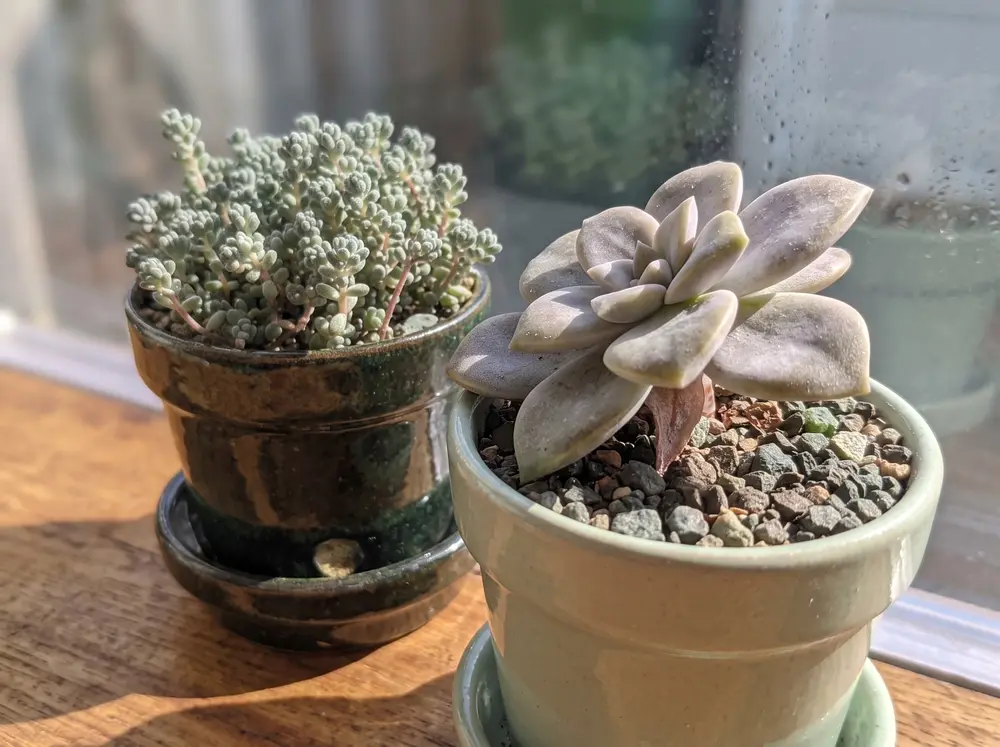
- Many cacti and succulents (aloe, jade, echeveria, etc.)
- Herbs (basil, thyme, rosemary—best with several hours of sun)
- Some palms and citrus (with enough hours + good watering)
If you have bright indirect light
Good choices:
- Monstera, philodendron, many hoyas
- Rubber plant (ficus elastica)
- Many orchids (depending on type)
- Dracaena, schefflera
If you have medium light
Good choices:
- Pothos, heartleaf philodendron
- Peace lily (often best here—not deep shade)
- Snake plant (slower)
- ZZ plant (slow but reliable)
If you have low light
Good choices (tolerant, not fast-growing):
- ZZ plant
- Cast iron plant (aspidistra)
- Some snake plants
- Pothos (will live, grow slowly)
Reality check : If a space is truly low light and you want healthy growth, add a grow light. It’s the cleanest solution.
Grow Lights : When They Help and How to Use Them Correctly
Grow lights are not all equal but a decent LED grow light placed at the right distance can absolutely support high-light plants.
How to use them successfully
- Put lights on a timer (most houseplants do well with a consistent day length)
- Keep the light close enough to matter (distance is everything)
- Combine with good watering habits: more light = faster drying soil
Common mistake: a weak light mounted far above the plant. It looks bright to your eyes, but plants experience much less usable intensity at leaf level.
FAQs
Is light through a window considered “indirect” ?
It depends on whether direct sunbeams hit the leaves. If sun hits the plant for hours, that’s direct sun (even through glass). If the room is bright but the sun doesn’t hit the leaves, that’s bright indirect.
Can I move a plant from low light straight into full sun ?
Usually not safely. Most plants need acclimation—move them brighter in steps over 1–2 weeks to prevent scorch and shock.
Why does my plant look fine in summer but struggle in winter ?
Winter brings :
- Shorter days
- Lower sun angle
- Sometimes colder glass and drafts
So the same “spot” can shift down a whole light category in winter.